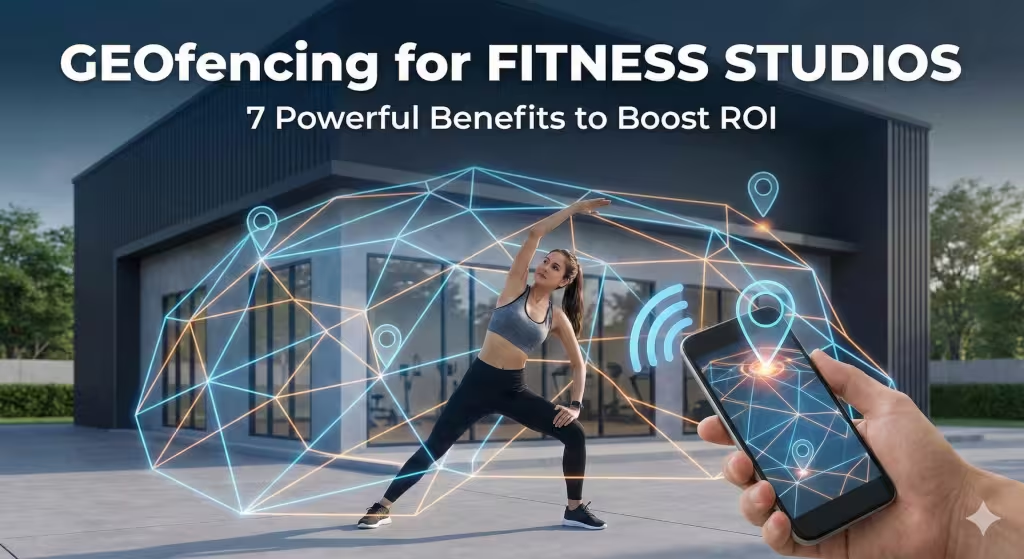
The New Frontier of Local Fitness Marketing
For fitness studios, location is everything. If you own a gym or a yoga space, you know that your best customers are the people who live and work right down the street. In the past, you might have sent out postcards or flyers to everyone in a certain zip code. We call that “spray and pray” marketing, and honestly, it is not very efficient.
Today, we have something much better. It is called geofencing. Think of it like a digital boundary that you draw on a map around a specific building or a street. When someone with a smartphone walks into that area, your business can send them a special message or show them an ad on their favorite apps. It is a way to use high-tech geography to help small fitness studios grow their membership.
In the world of boutique fitness studios, competition is everywhere. You are not just competing with the gym across the street; you are competing with home workout apps and busy schedules. This creates a lot of “marketing noise” where it is hard for your voice to be heard. Geofencing changes that. It allows for contextually relevant engagement. That is a fancy way of saying you are talking to the right person at the exact time they are thinking about their health.
This article will show you how geofencing is the future of growth for fitness studios. We will look at how it works, why it is better than old-school ads, and how you can use it to get more people through your doors.
How Geofencing Works for Fitness Studios

To understand how this helps fitness studios, we first need to look at the nuts and bolts of the technology. Imagine you have a digital pen. You open a map of your city and draw a tight circle or a custom shape around a specific location. This shape is what we call a “polygon.” In the world of geofencing, this is your virtual perimeter.
The technology uses the GPS, Wi-Fi, and cellular data from smartphones to know when a device enters that shape. When a person crosses that digital line, it triggers an action. For fitness studios, this action is usually an advertisement. This does not mean the person gets a random text message—that would be annoying. Instead, when they open an app like a news site, a weather app, or a game, they see a beautiful ad for your studio.
There are three main types of triggers: entry, exit, and dwell time. Entry is when they first walk into the zone. Exit is when they leave. Dwell time is my favorite. It tracks how long someone stays in a spot. If someone spends forty minutes at a healthy salad shop near your fitness studios, they are likely someone who cares about their health. That is the perfect time to show them what you offer.
Core Benefits of Geofencing for Fitness Studios
The primary reason to use this technology is the hyper-local targeting precision it offers. Most people will not drive thirty minutes to go to a gym. They want something on their way to work or close to home. By using geofencing, you stop wasting money on ads for people who live too far away. You are only spending your budget on the neighbors who are most likely to become members of your fitness studios.
Another huge benefit is something we call competitor conquesting. This sounds aggressive, but it is just smart business. You can draw a geofence around other fitness studios in your area. When their members walk in, they see your ad. You might offer them a “first month free” or a “switch and save” deal. You are reaching people who you already know like to exercise.
This technology also creates a sense of urgency. If someone is walking through a shopping center near one of your fitness studios, you can serve them an ad that says, “Stop in for a tour in the next hour and get a free water bottle.” This takes someone who was just “thinking” about working out and gives them a reason to act right now.
One of the best parts for a data lover like me is the foot traffic reporting. We can set up “Conversion Zones.” This means we can track when someone sees your ad and then physically walks into your fitness studios. It proves that your marketing is actually working. You can see exactly how many dollars you spent to get one new person through the door.
Advanced Tactics: Beyond the Basic Radius
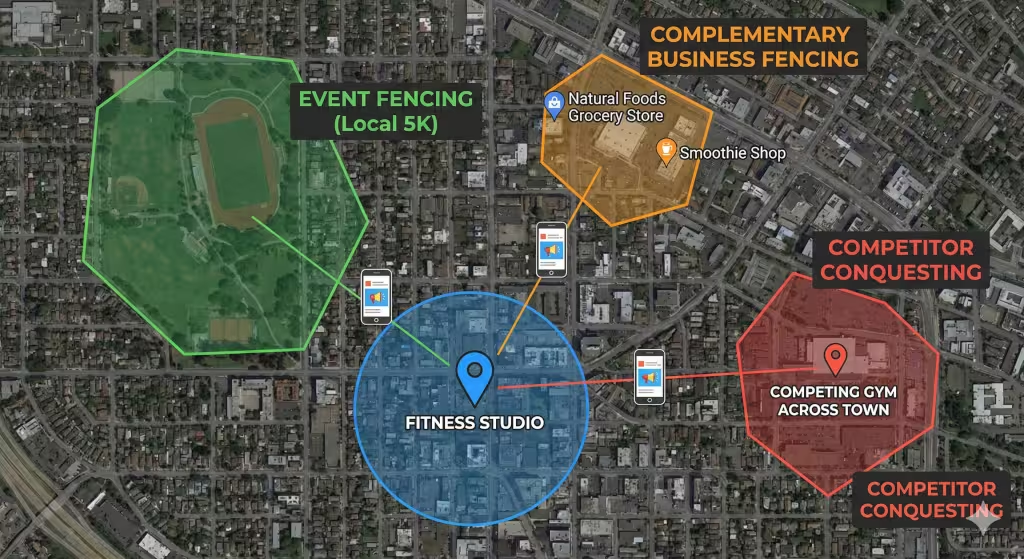
Once you understand the basics, you can get creative. You do not just have to fence in your own building or your competitors. Think about where your ideal members hang out. If there is a local 5K race or a marathon happening, you can put a geofence around the finish line. Every runner there is a potential lead for fitness studios.
You can also target “complementary businesses.” These are places your customers go that are not gyms. Think about health-food stores, vitamin shops, or stores that sell athletic shoes. People at these locations are already in a “health” mindset. When they see an ad for your fitness studios, it feels natural and helpful rather than intrusive.
Dwell time optimization is another advanced move. Instead of targeting everyone who drives past a juice bar, you only target those who stay for at least fifteen minutes. This filters out people just passing through and focuses on the people who are actually spending time in that environment. This is how you find the most loyal members for fitness studios.
Common Questions Answered About Fitness Studios and Tech
A lot of owners of fitness studios ask about the cost. They worry that high-tech geography is only for big brands. The truth is that geofencing is very affordable. You usually pay based on “CPM,” which means the cost per one thousand times your ad is shown. Because the targeting is so narrow, you spend less total money than you would on a giant billboard that most people ignore.
Another common question is whether this is better than Facebook ads. Facebook is great for targeting interests, but geofencing is better for targeting physical intent. If someone is physically standing in a sporting goods store, that is a stronger signal than them just “liking” a fitness page three years ago. For fitness studios, location is the strongest data point you have.
People also wonder if they need their own app. The answer is no. You can run these ads through a “programmatic” system. This means your ads show up in thousands of different popular apps that people already have on their phones. It makes it very easy for small fitness studios to look like big, professional brands.
Finally, owners ask about accuracy. While GPS is good, we also use Wi-Fi signals and Bluetooth. This allows us to be accurate within a few feet. For fitness studios located in busy malls or urban areas, this precision is the difference between reaching a customer and missing them entirely.
Data Integrity and Privacy Compliance
I take data very seriously. When we talk about tracking phones, people sometimes get worried about privacy. It is important to know that geofencing for fitness studios is safe and follows the law. We do not collect names, home addresses, or phone numbers of the people in the fence. The data is “anonymized,” which means we see a device ID, not a person.
We follow rules like the GDPR and CCPA. These laws make sure that digital marketing is fair. Most people actually like getting ads that are relevant to where they are. If you are looking for a place to workout, an ad for local fitness studios is helpful. As long as you provide value and respect the digital boundaries, your neighbors will appreciate the information.
Examination of Geofencing Strategies
To truly master the art of local growth, owners of fitness studios must understand that geofencing is part of a larger ecosystem. It is not a magic wand, but a precision tool. When you use it correctly, it acts as a magnet. Imagine a person named Sarah. Sarah lives three miles away from your studio. She has been thinking about joining one of the local fitness studios for months, but she is busy with work and kids.
One Saturday morning, Sarah goes to a local park where a lot of people go for walks. You have a geofence around that park. As Sarah sits on a bench to check the weather on her phone, she sees an ad for your studio. It says, “Join our community! First class is free for neighbors.” This is the power of context. She is already at the park, she is already thinking about being active, and now your business has provided a solution. This is why fitness studios that use this technology see such high engagement.
The Psychology of Location
There is a psychological reason why geofencing works so well for fitness studios. It is based on the idea of “proximity convenience.” In our modern world, time is the most valuable thing we have. When someone sees an ad for a business that is nearby, the mental barrier to visiting that business is very low.
If Sarah saw an ad for a gym twenty miles away, her brain would instantly say, “That is too far.” But since your fitness studios are right in her neighborhood, her brain says, “I could stop there on my way home.” Geofencing taps into this local mindset. It reinforces the idea that your studio is a part of her daily life and her community.
Refining Your Audience
Not all foot traffic is created equal. If you own one of the many fitness studios that specializes in high-intensity training, you might not want to target everyone. You can refine your geofencing by combining it with “demographic overlays.” This means you only show ads to people in your fence who are also in a certain age group or who have shown an interest in health and wellness.
This “layering” of data is what makes my job as a computer scientist so interesting. We are combining the physical world (the geofence) with the digital world (user interests). For fitness studios, this means you can be incredibly picky about who sees your ads. You are not wasting a single cent on people who are not a good fit for your specific style of coaching or environment.
Why Fitness Studios Need a “Geo-Fence First” Mindset
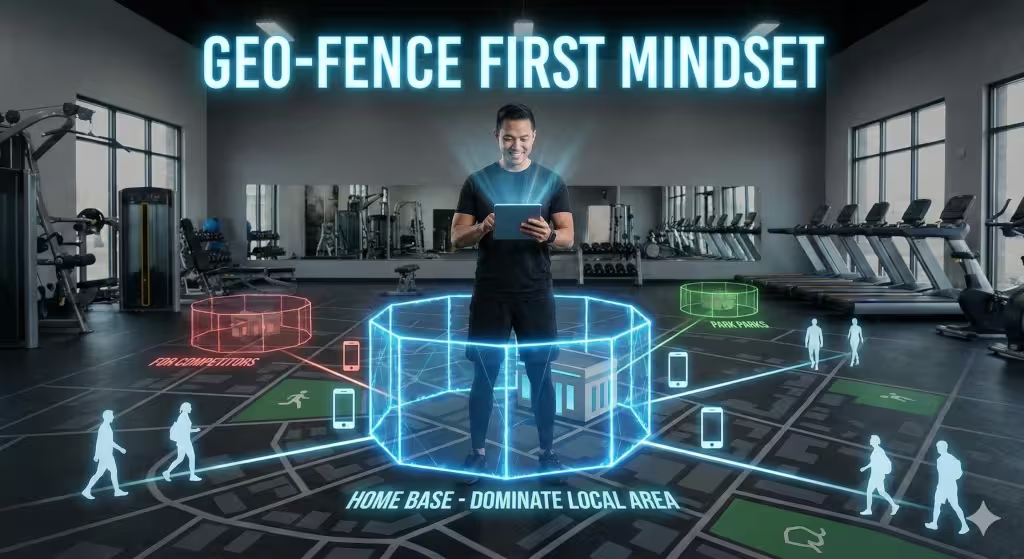
If you look at the most successful boutique fitness studios today, they all have one thing in common: they dominate their local area. They are the “famous” gym in their specific five-block radius. Geofencing is the best way to achieve this local fame.
When you run a geofencing campaign, you are essentially “owning” the digital space around your physical location. You can make sure that anyone who enters your territory knows who you are. This builds brand awareness over time. Even if someone does not click your ad the first time, seeing the name of your fitness studios repeatedly while they are in the neighborhood builds trust. When they are finally ready to commit to a workout plan, your name will be the first one they think of.
Creative Campaigns for Different Seasons
The needs of fitness studios change throughout the year. In January, everyone is looking for a “New Year, New You” program. During the summer, people might be more interested in “beach body” workouts. Geofencing allows you to change your message instantly.
During the winter holidays, you can put a fence around the local shopping mall. Your ad could say, “Take a break from holiday stress with a yoga session at our fitness studios.” In the spring, you could target local parks with ads for outdoor boot camps. The flexibility of this technology means your marketing can move as fast as your business does.
Comparing Geofencing to Traditional Marketing
Let’s do a quick comparison. In the old days, fitness studios used “EDDM” or Every Door Direct Mail. You would pay the post office to drop a postcard in every mailbox in a zip code.
-
Waste: With mailers, you pay for people who are physically unable to exercise, people who already have a gym, and people who simply don’t care. With geofencing, you only pay for people who are active and in the right location.
-
Tracking: With a postcard, you never really know if it worked unless the person brings the card in. With geofencing, we can see if they saw the ad and then visited your fitness studios.
-
Cost: Printing and postage are expensive and prices keep going up. Digital ads for fitness studios can be adjusted to fit any budget, and you can stop them at any time with the click of a button.
-
Timing: A postcard might sit in a pile of junk mail for a week. A geofencing ad reaches the person while they are out and about, ready to make a decision.
When you look at it this way, it is clear why modern fitness studios are moving away from paper and toward digital boundaries.
Technical Setup: Making it Easy
You might be thinking, “Atlas, this sounds complicated. I am a fitness coach, not a computer scientist.” The good news is that setting this up is much easier than it used to be. Most fitness studios work with a partner who handles the technical side.
The process usually looks like this:
-
Define Your Goals: Do you want more foot traffic, more website sign-ups, or more phone calls?
-
Map Your Fences: We look at a map together and pick the best spots—your studio, your competitors, and local hotspots.
-
Create Your Ads: You need bright, happy images of people working out in your fitness studios.
-
Launch and Learn: We start the ads and then look at the data. If one location is not sending you any members, we turn it off and try a different spot.
This “test and learn” approach is how the best fitness studios stay ahead of the curve. You are constantly getting smarter about where your customers come from.
The Value of Loyalty and Retention
Geofencing is not just for finding new members; it can also help you keep the ones you have. This is a secret that many fitness studios miss. You can put a geofence around your own studio to “check in” with your current members.
When a member walks in, you could trigger a message that says, “Welcome back! Don’t forget to grab a towel.” Or when they leave, you could send a message saying, “Great workout! See you on Wednesday?” This makes your members feel seen and valued. In the world of fitness studios, retention is just as important as acquisition. If you can keep your members for one extra month on average, your profits will soar.
Real-World Examples of Success
I have seen many fitness studios thrive with these tactics. One small yoga studio in a busy city felt like they were invisible. They started geofencing a nearby organic grocery store and a high-end clothing shop. Within three months, their “introductory” classes were completely full.
Another group of fitness studios used competitor conquesting during a big national gym’s “price hike.” When the big gym raised its rates, the small studio sent ads to everyone at that location saying, “Tired of price hikes? Come to a place that treats you like family.” They picked up fifty new members in a single weekend. This is the power of being in the right place at the right time.
Future Trends in Geo-Spatial Tech
As we look toward the future, the technology for fitness studios will only get better. We are starting to see “predictive geofencing.” This uses historical data to guess where people will be. For example, if the data shows that people who visit a certain park on Saturday usually go to a coffee shop afterward, we can show the ad at the park to get them thinking about your fitness studios before they even reach the coffee shop.
We are also seeing better integration with wearable tech. Imagine an ad that only shows up for people whose smartwatches show they have already hit their “step goal” for the day. These people are clearly motivated, making them perfect candidates for your fitness studios. The bridge between our physical bodies and our digital lives is getting shorter every day.
Overcoming Challenges
Of course, no technology is perfect. One challenge for fitness studios is “signal interference” in very tall buildings. If your studio is on the 20th floor of a skyscraper, the GPS might be a little fuzzy. This is why we use multiple signals like Wi-Fi and beacons to make sure we are being as accurate as possible.
Another challenge is “ad fatigue.” If people see the same ad for your fitness studios every single day, they will start to ignore it. The key is to change your images and messages every few weeks. Keep it fresh, keep it exciting, and keep it focused on the benefits you offer to your members.
Making the Move to Geofencing
If you are running one of many fitness studios and you are tired of old-fashioned marketing that doesn’t work, it is time to try something new. You don’t need a PhD from Harvard to see the value in reaching local customers where they stand.
Start small. Pick three or four locations that you know your ideal members visit. Run a small campaign for a month. Look at the foot traffic data. You will likely see that the people coming into your fitness studios are coming from those specific fenced areas. Once you see the results, you can grow your “digital kingdom” one fence at a time.
Conclusion: Building a Geo-Smart Fitness Brand
In the end, geofencing is about making your marketing as strong as a workout. It takes the guesswork out of finding new members. By using the power of geography, fitness studios can grow faster and more efficiently than ever before. You are not just hoping people find you; you are meeting them where they already are.
The future of this technology is even more exciting. Soon, we will use AI to predict when people are most likely to visit fitness studios based on their past habits. But for now, just starting with a simple fence around your local neighborhood can change your business. It is time to stop thinking broad and start thinking local. Your future members are right outside your door. You just need to reach out and invite them in.
For fitness studios, the goal is always to help people live better lives. Geofencing is the tool that helps you find those people so you can do your job. It is efficient, it is smart, and it is the most powerful way to grow in the modern world.
Whether you run a massive gym or a tiny pilates space, the geography of your city is your best friend. Use it wisely, protect the data of your customers, and watch your community grow. The digital boundaries are waiting for you to draw them.