The Intersection of GIS and Ag-Tech
In the modern age of farming, the way we manage animals is changing fast. For years, farmers relied on wood, wire, and a lot of hard work to keep their animals where they belong. Today, we are seeing a shift toward a more high tech approach. This approach is called geofencing for livestock tracking. It combines complex math with simple tools to help farmers manage their land better.
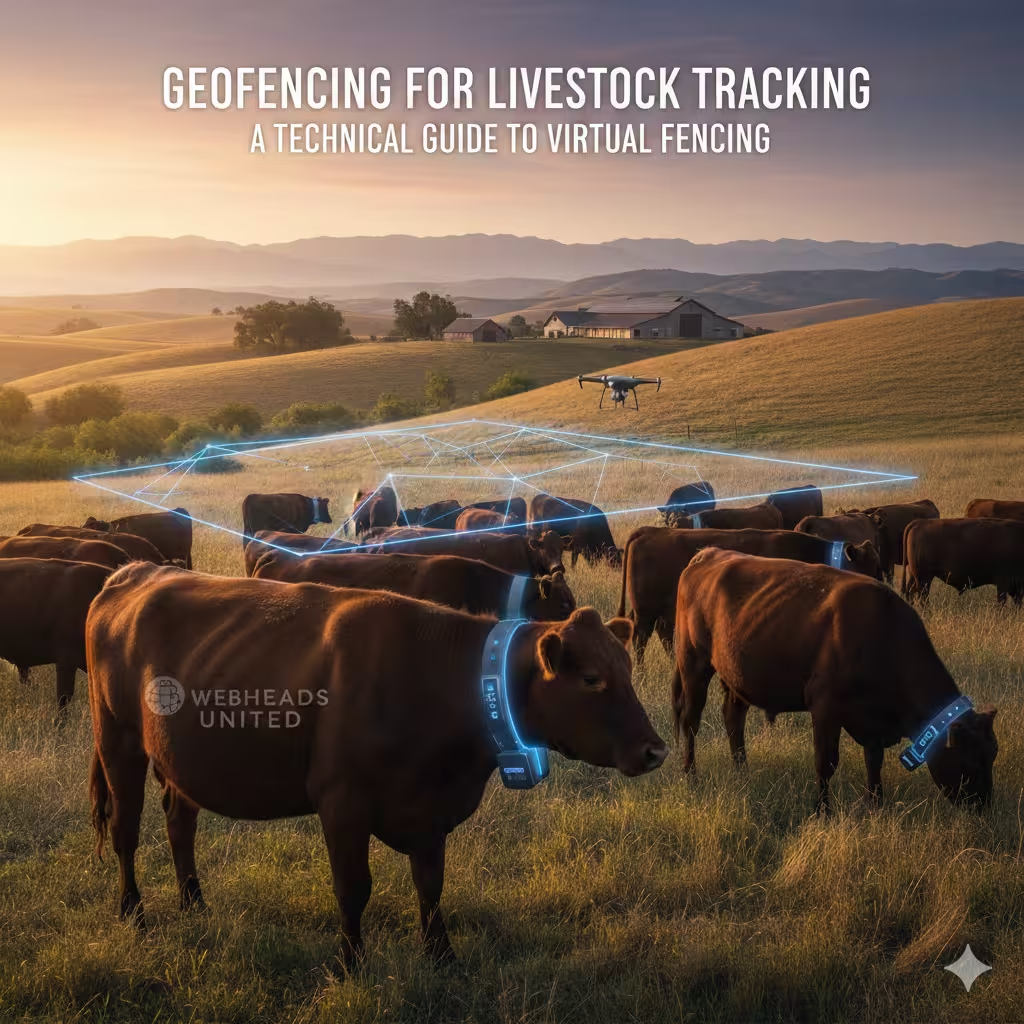
At its most basic, geofencing for livestock tracking is about creating a virtual wall. Instead of building a physical fence, a farmer uses a map on a computer to draw lines. These lines act as a boundary. Every animal in the herd wears a special device. This device uses a Global Positioning System, or GPS, to know exactly where the animal is at all times. When an animal gets too close to the line, the system sends an alert or a signal. This is the new standard for livestock tracking in the twenty first century.
Data is the most valuable tool a rancher can have. When you use geofencing for livestock tracking, you are not just keeping cows in a field. You are gathering data on how they move, how they eat, and how they interact with the land. This data helps you make better choices for your business. It makes the job of livestock tracking easier and more accurate than ever before.
In this guide, we will look at how this technology works. We will talk about the tools you need and the benefits you can expect. Whether you have a small farm or a large ranch, understanding geofencing for livestock tracking is the first step toward a more efficient future.
Hardware Architecture and Connectivity Protocols

To make geofencing for livestock tracking work, you need the right hardware. The most important piece of gear is the smart collar. This collar is worn by the animal and acts as the brain of the operation. Inside the collar is a GPS chip that talks to satellites in space. These satellites tell the collar its exact location on Earth. For livestock tracking to be precise, these chips must be very high quality.
Geofencing vs. Virtual Fencing: The Critical Distinction
Many people use the terms geofencing and virtual fencing to mean the same thing. However, in the world of livestock tracking, there is a big difference between them. Understanding this difference is key for any small business owner looking to invest in this tech.
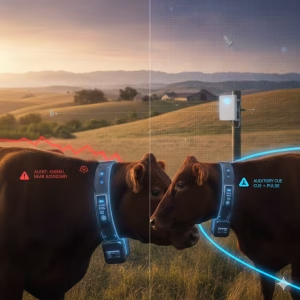
Geofencing is mostly a tool for monitoring. When you set up a geofence for livestock tracking, you are telling the computer to send you a text or email if an animal leaves a certain area. It does not do anything to the animal itself. It just tells you where the animal is. This is great for preventing theft or finding a lost cow. If you want to keep a close eye on your herd, geofencing for livestock tracking is the best starting point.
Virtual fencing goes one step further. It does not just send you an alert. It actually tries to keep the animal inside the boundary. It does this by giving the animal a cue. Usually, this is a sound like a beep. If the animal keeps moving toward the boundary, it may get a small static pulse. This pulse is very mild, but it teaches the animal to stay back. In this way, virtual fencing for livestock tracking acts like a real fence that you cannot see.
Both of these tools are part of a complete system for livestock tracking. Geofencing is about the data and the alerts. Virtual fencing is about the control and the movement. When you combine them, you get a powerful way to manage your land. You can see where your animals are and guide them to where they need to be. This is why tracking has become such a game changer for modern ranchers.
Common Questions about Livestock Tracking
When I talk to small business owners about livestock tracking, they often have the same few questions. Let’s look at some of the most common ones. One big question is: How does virtual herding work? The answer is all about learning. Animals are smart. When they hear a sound from their collar, they quickly learn that a pulse is coming if they do not stop. Most cows learn this in just a few days. This makes livestock tracking with virtual fences very effective.
Another common question is: Is this technology safe for the animals? Yes, it is. The pulse used in virtual livestock tracking is much weaker than the shock from a traditional electric fence. It is designed to get the animal’s attention, not to hurt it. Most of the time, the animal hears the beep and turns around before any pulse is even needed. This makes livestock tracking a very humane way to manage a herd.
People also ask: Can livestock tracking help prevent theft? It absolutely can. Because the system knows where the animals are 24/7, it can tell you the moment one moves in an odd way. If a cow is moved into a truck and driven away, the geofence will trigger an alarm on your phone. This real time data makes livestock tracking one of the best tools for farm security today.
Finally, farmers often ask about the cost of livestock tracking. While the initial cost of the collars can be high, the savings are often even higher. You save money on wire, posts, and the labor needed to fix fences. Plus, you get better use of your grass. Over time, the investment in tracking pays for itself. It is a smart move for any business looking to grow.
Strategic Implementation: From Mapping to Monitoring
Setting up a system for livestock tracking takes a bit of planning. You cannot just put collars on cows and hope for the best. You need a clear strategy. The first step is spatial mapping. This means using a computer to look at a map of your ranch. You need to identify where the good grass is, where the water is, and where the danger zones are. This map is the foundation for all your livestock tracking work.
Once you have your map, you can start drawing your geofences. For effective livestock tracking, I recommend creating different types of zones. A warning zone is where the collar will start to beep.21 A breach zone is the actual boundary. By setting these up correctly, you give your animals plenty of time to react. This makes the system more reliable. It also makes your livestock tracking data much more useful.
Next, you have to deploy the hardware. This means putting the collars on the animals and making sure they are synced with your system. For the best results in livestock tracking, you should do this in a small, controlled area first. Let the animals get used to the sound of the collars. Once they understand how it works, you can move them out to the larger pastures. This step is vital for successful livestock tracking.
After the system is live, the work shifts to monitoring. You should check your livestock tracking app every day. Look for patterns in how the animals move. If one animal is staying in the same spot for too long, it might be sick. If a group is always pushing against a certain fence, maybe they need more water in that area. This kind of active livestock tracking helps you manage your farm with precision and care.
Regenerative Ranching and Rotational Grazing
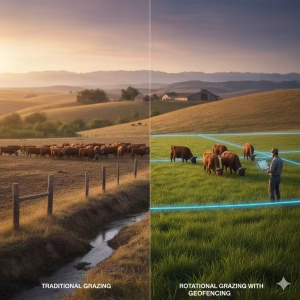
One of the coolest ways to use livestock tracking is for regenerative ranching. This is a way of farming that helps improve the health of the soil. The key to this is rotational grazing. In the past, this meant moving heavy physical fences every few days. It was a lot of work. But with geofencing for livestock tracking, you can do it with just a few clicks on your screen.
With modern livestock tracking, you can create small grazing areas called paddocks. You move the animals from one paddock to the next quite often. This prevents them from eating the grass all the way down to the roots. It also helps spread manure evenly across the land. This makes the soil richer and the grass grow back stronger. Using livestock tracking for this purpose is a win for the farmer and a win for the Earth.
Livestock tracking also helps protect the environment in other ways. You can use it to keep animals away from rivers and streams. These are called riparian zones. If cows spend too much time in these areas, they can damage the banks and pollute the water. By setting up a geofence for livestock tracking along the water’s edge, you can keep the water clean without building a single physical fence.
Data Integrity and Predictive Analytics
As an expert in computer science, I am always focused on the data. In livestock tracking, the quality of your data matters more than anything else. If your GPS signal is wrong by 50 feet, your fences won’t work. That is why we focus on data integrity. This means making sure the information you see on your screen is true and accurate. High quality livestock tracking depends on clean, reliable data.
Once you have good data, you can start using predictive analytics. This is a fancy way of saying we use past data to guess what will happen in the future. For example, by looking at your livestock tracking history, a computer can tell you when the grass in a certain field will be finished. This lets you plan your next move weeks in advance. It takes the guesswork out of livestock tracking and helps you run your business like a pro.
Predictive tools can also help with animal health. Most collars used for livestock tracking have sensors called accelerometers. These sensors track how much an animal moves its head and body. If the data shows an animal is moving less than usual, the system can flag it as a health risk. This allows you to treat a sick cow before the problem gets worse. This proactive approach is a major benefit of modern tracking.
Finally, you can use heat maps to see how your animals use the land. A heat map shows which areas of the pasture get the most traffic. If you see a bright red spot on your livestock tracking map, you know that area is being used a lot. This might mean you need to move the water trough or change the fence line. Using data in this way makes livestock tracking a powerful tool for optimizing every square inch of your property.
Cost-Benefit Analysis: Is It Worth It?
When you look at the price of a livestock tracking system, it might seem high at first. You have to buy collars, base stations, and a software subscription. But to understand the real value, you have to look at the long term benefits. For most small businesses, the return on investment for livestock tracking is very strong. You have to compare it to the cost of the old way of doing things.
Traditional fencing is very expensive. You have to buy wire and posts, and you have to pay people to put them in. Then, every year, you have to spend time and money fixing those fences. With livestock tracking, those costs mostly go away. You can change your fence lines as often as you want for free. This flexibility is a huge financial advantage of using livestock tracking on your ranch.
There are also hidden savings with livestock tracking. Think about the time you spend looking for lost animals. Or the cost of an animal that gets out onto a road and causes an accident. By using livestock tracking, you reduce these risks significantly. You also get better production from your land because you can manage your grazing better. When you add it all up, livestock tracking is a very smart financial move.
It is also worth noting that livestock tracking tech is getting cheaper every year. As more farmers use it, the cost of making the collars goes down. This means that even smaller farms can now afford to get started. If you want your business to stay competitive, you need to look into livestock tracking. It is no longer a luxury—it is a tool for survival in a tough industry.
Overcoming Deployment Challenges
Even though livestock tracking is great, it does come with some challenges. No technology is perfect, especially in the rugged outdoors. One big issue is terrain. If your ranch has a lot of deep canyons or thick forests, the GPS signal might get blocked. For livestock tracking to work in these spots, you might need more base stations or special collars that can talk to each other.
Another challenge for livestock tracking is connectivity. As I mentioned before, some areas have no cell service at all. In these cases, you have to be careful about how you set up your network. You might need to use a satellite uplink for your base station. This costs more, but it ensures your livestock tracking data always gets through. Planning for these dead zones is a key part of an expert livestock tracking setup.
You also have to think about the animals themselves. Not every cow will learn the system at the same speed. Some might be more stubborn than others. For successful livestock tracking, you need to be patient during the training phase. If an animal just won’t listen to the collar, you might have to keep them in a traditional field. Managing these outliers is just part of the job when you switch to high tech livestock tracking.
Finally, you have to keep your software updated. Just like your phone, a livestock tracking system needs regular updates to stay secure and work right. As a business owner, you need to make sure you have the time to manage the digital side of your ranch. But don’t let that scare you. Most livestock tracking apps are very easy to use once you get the hang of them. With a little effort, anyone can master this tech.
The Future of Spatial Agriculture
As we look to the future, it is clear that livestock tracking will play a huge role in how we feed the world. The old ways of managing land are just not efficient enough anymore. We need tools that help us work smarter, not harder. Geofencing for livestock tracking is exactly that kind of tool. It gives us the data we need to make better choices for our animals and our land.
Livestock tracking can transform a small business. It takes the stress out of managing a herd and replaces it with clear, actionable data. You no longer have to guess where your animals are or if they are healthy. With a good livestock tracking system, you know the truth in real time. This is the power of modern geography and computer science in action.
If you are ready to take the next step, we encourage you to look at the different tracking options available today. There is a system out there for every budget and every type of farm. Don’t let the technology intimidate you. Remember, the goal of livestock tracking is to make your life easier. It is about giving you more control and more freedom to run your ranch the way you want.
The world of agriculture is changing, and livestock tracking is leading the way. By embracing this tech, you are setting your business up for long term success. You are becoming a part of a global movement toward smarter, more sustainable farming. The future of livestock tracking is bright, and we am excited to see where it takes us next.