When working with AI personas at WebHeads United, we spend a lot of my time thinking about how people think and act. When we build digital personalities, we have to understand what makes humans tick. That is why we love looking at tools like the Myers-Briggs Type Indicator and the DISC assessment.
Think of these tools as different lenses for a pair of glasses. One lens helps you see what is happening deep inside someone’s mind, and the other lens helps you see how they act when they are at work or with friends. In the world of professional growth, choosing between a Myers-Briggs vs. DISC comparison is like choosing the right tool for a home project. You would not use a hammer when you need a screwdriver, right? Both are great, but they do different jobs.
Today, we are going to look at how these frameworks help us understand ourselves and the people around us. Whether you are a boss trying to help your team get along or someone who just wants to understand why you do what you do, this guide is for you. We will keep things simple, clear, and focused on the facts.
Theoretical Foundations: Jungian Theory vs. Marston’s Behavioralism

To understand the Myers-Briggs vs. DISC comparison, we have to look at where these ideas started. The Myers-Briggs system is based on the work of a famous man named Carl Jung. He believed that every person has a specific way of taking in information and making decisions. He thought these traits were born into us. It is like being left-handed or right-handed. It is just the way your brain is wired.
On the other side, we have the DISC model. This was created by a man named William Moulton Marston in 1928. He was a very interesting person who even helped create the lie detector test! Marston was less worried about what was happening deep in the “hidden” parts of the brain. Instead, he wanted to know how people reacted to the world around them.
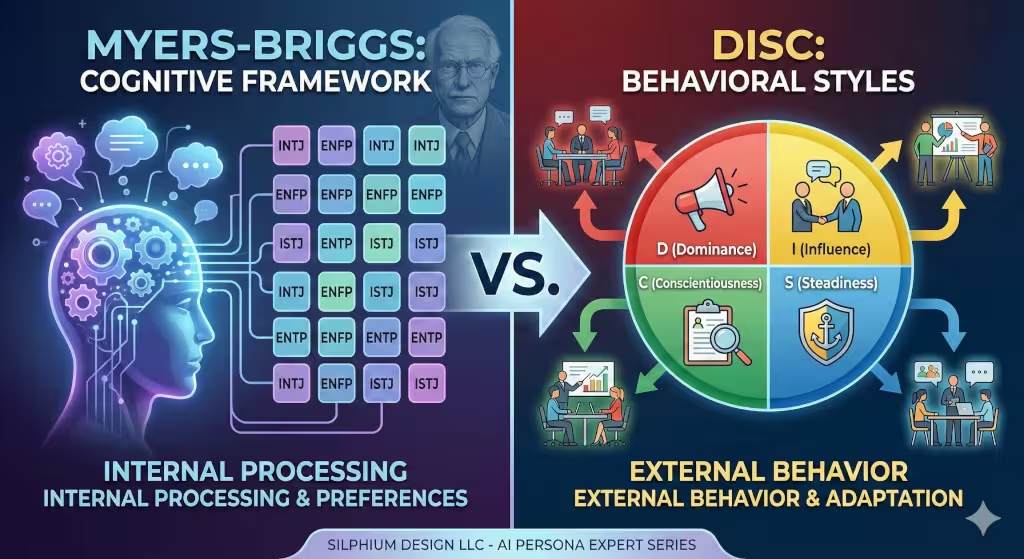
The DISC model looks at four main styles of behavior. These are Dominance, Influence, Steadiness, and Conscientiousness. If you are using it, you are looking at how a person acts in a specific environment. For example, you might act one way at a football game and a totally different way at a library. The assessment helps us see those changes. It focuses on what we can actually see and hear from a person.
Structural Architecture and Complexity
When we look at the Myers-Briggs vs. DISC comparison, we see two very different shapes. Myers-Briggs uses a system of sixteen different types. It uses four pairs of opposites. You are either an Introvert or an Extrovert, a Sensor or an Intuitive, a Thinker or a Feeler, and a Judger or a Perceiver. When you put those together, you get a four-letter code like ISTJ or ENFP. It is a bit like a complex puzzle with many pieces.
The DISC model is much simpler, which is why a lot of businesses love it. Instead of sixteen types, it uses a circle divided into four main parts. Everyone has a mix of all four traits, but usually, one or two are much stronger.
The first part of DISC is Dominance. People high in this trait are very direct and want to win. The second part is Influence. These people are friendly and love to talk. The third part is Steadiness. They are calm, helpful, and do not like big changes. The fourth part is Conscientiousness. They care about rules, data, and getting things right. Because DISC is a circle, it shows how these traits blend together. It is much easier to remember four letters than sixteen complex types.
Key Functional Differences for Professional Application

One of the biggest parts of our Myers-Briggs vs. DISC comparison is how long the results last. In the Myers-Briggs world, your type is usually seen as something that stays the same your whole life. If you are a certain type at age twenty, you will likely be that same type at age fifty. It is about your inner “soul” or your core identity.
However, DISC is different. It is designed to measure how you adapt. You might take a DISC test for your job and show up as very high in Dominance because your job requires you to be a leader. But if you take it again while thinking about your time at home with your family, your results might show more Steadiness.
This makes DISC a very powerful tool for the workplace. It teaches people that they can “dial up” or “dial down” certain behaviors. If a manager knows a worker has a high DISC score in Conscientiousness, they know that worker needs clear instructions and plenty of time to check for mistakes. If the manager has a high DISC score in Influence, they might need to remember to slow down and give that worker the details they need.
Which is Better for Team Building?
Many people ask which tool they should use for their team. In this Myers-Briggs vs. DISC comparison, the answer usually depends on how much time you have. Myers-Briggs is wonderful for deep retreats where people want to share their life stories and understand their deepest motivations. It builds a lot of empathy.
But for a fast-moving office, DISC is usually the winner. Why? Because you can learn the basics of DISC in about an hour. Once a team knows the DISC language, they can start using it immediately. You might hear someone say, “Hey, I know I am being very high-D right now, let me slow down and listen.” Or someone might say, “I need to approach this person with more of an S-style because they seem stressed.”
DISC helps people change their behavior in the moment to get better results. It is less about “who you are” and more about “how you are acting right now.” This makes it a very practical for improving communication and reducing fights at work.
What is the Main Difference Between DISC and Myers-Briggs?
To keep it very simple for our Myers-Briggs vs. DISC comparison: Myers-Briggs is about your “internal” world, and DISC is about your “external” world.
Imagine a person sitting quietly at a desk. Myers-Briggs wants to know what they are thinking and feeling. Are they dreaming about the future? Are they thinking about facts from the past? DISC wants to know how they will react if you walk up and ask them to change their project. Will they be upset because it breaks the rules? Will they be excited because it is a new challenge?
The DISC assessment is a map of behavior. It does not try to tell you who you are deep down. It just tells you how you are likely to show up in a room. This is why many people find DISC to be very refreshing. It does not feel as “heavy” as a personality test. It feels more like a communication weather report.
Is DISC More Accurate Than MBTI?

Accuracy is a tricky word in my field of AI and psychology. Both tools are accurate if you use them for the right reasons. In our Myers-Briggs vs. DISC comparison, we look at “validity.” This is a fancy word that means the test actually measures what it says it measures.
The Myers-Briggs test is very good at sorting people into categories. But some scientists think it is a bit too rigid. People are not always just one thing or another. DISC is often seen as very accurate for workplace behavior because it allows for more “shades of gray.”
The DISC model acknowledges that we are all a blend. You aren’t just a “D” or an “I.” You are a unique mix of all of them. This makes the DISC results feel very personal and true to life for most people who take the test. When people read their report, they often say, “Wow, this sounds exactly like me at work!”
Can You Use Both Assessments Together?
Yes, you absolutely can! Using both can give you a “super-power” understanding of a person. In a Myers-Briggs vs. DISC comparison, you might find that an INTJ (which is a Myers-Briggs type) often shows up with high Conscientiousness in a report. This makes sense because both are about being organized and thinking deeply.
However, sometimes you get surprises. You might find an Introvert who has a very high Influence score. This means that even though they need quiet time to recharge their batteries, they have learned how to be very outgoing and friendly when they are with other people.
By looking at both, you see the “engine” (Myers-Briggs) and the “car’s body” (DISC). The engine is what powers the person, but the body is what the world sees moving down the road. Using DISC alongside Myers-Briggs creates a very complete picture of a human being.
Recruitment and Hiring: A Word of Caution
I want to be very direct with you here. Whether you prefer the Myers-Briggs vs. DISC comparison, you should never use these tests to decide who to hire. As a data expert, I can tell you that these tests were not designed to predict who will be good at a job.
If you use a DISC test to hire someone, you might miss out on a great worker. Just because someone has a “high-S” in DISC does not mean they cannot be a great leader. It just means they will lead in a calm and steady way. These tools should be used for training and talking, not for “gatekeeping” jobs.
The best use of DISC in hiring is after the person is hired. You can use their results to help them get along with their new boss and team. It helps them “hit the ground running” because they already have a guide on how to talk to their new coworkers.
Leadership Development: How Different Styles Interact
In leadership, the Myers-Briggs vs. DISC comparison becomes very useful. Great leaders need to be “bi-lingual.” This means they need to speak their own DISC language and the language of their employees.
Imagine a boss who is a very high “D” in DISC. They are fast, loud, and want results now. If they have an employee who is a high “S” in DISC, that employee might feel scared or rushed. The “S” person wants peace and time to do a good job. A great leader uses DISC to realize, “I need to slow down, lower my voice, and be more patient with this person so they can do their best work.”
This is called “Adaptive Leadership.” It is the ability to change your style based on who is standing in front of you. It is the perfect tool for this because it gives you a simple code to follow. It makes leadership feel less like a mystery and more like a skill you can practice every day.
Final Verdict: Data-Driven Selection Criteria
So, after our long Myers-Briggs vs. DISC comparison, which one should you choose?
Choose Myers-Briggs if you want to help people understand their inner selves, their long-term career paths, and their deepest values. It is a journey of discovery.
Choose DISC if you want to improve how your team talks to each other tomorrow. Choose it if you want to reduce stress in the office and help people understand why their coworkers act the way they do. DISC is about action, communication, and making small changes that lead to big results.
At WebHeads United, we see the value in both when building AI personas. But for the fast-paced world of technology and team growth, DISC is often the most helpful tool in our kit. It is simple, it is flexible, and it works.
Understanding the Dominance Style in DISC
The “D” in DISC stands for Dominance. People with this style are usually very easy to spot. They are the ones who walk into a room and immediately want to take charge. They care about two things: tasks and speed. They want to get things done, and they want to get them done ten minutes ago!
In our Myers-Briggs vs. DISC comparison, a high-D person is often seen as very strong-willed. They are not afraid of a fight. In fact, they might even enjoy a little bit of a debate. They are motivated by power and winning. If you are working with a high-D, you should be direct. Do not waste their time with too much small talk. Give them the “bottom line” first.
However, the “D” style has some weaknesses. They can be very impatient. Sometimes they hurt people’s feelings without meaning to because they are so focused on the goal. They might run over people to get to the finish line. Learning about DISC helps these people realize that they need to stop and listen once in a while.
Exploring the Influence Style in DISC
The “I” in DISC stands for Influence. These are the “people people” of the world. If you know someone who can talk to a brick wall and make it laugh, they probably have a high-I DISC score. They are motivated by being liked and having fun.
In a Myers-Briggs vs. DISC comparison, these folks are usually the Extroverts. They love being the center of attention. At work, they are great at selling ideas and getting everyone excited about a new project. They bring energy to the room.
The struggle for a high-I person is staying focused. Because they love people so much, they can get distracted by talking and forget to finish their work. They also might not like looking at boring data or long lists of rules. In the DISC system, we teach these people how to use their charm to help the team while also remembering to check their to-do lists.
The Importance of the Steadiness Style in DISC
The “S” in DISC stands for Steadiness. These are the nicest people you will ever meet. They are the “glue” that holds a team together. While the “D” and “I” styles are busy running around and talking, the “S” person is quietly making sure everyone is okay.
In the Myers-Briggs vs. DISC comparison, these people are often the ones who value harmony and tradition. They do not like big, sudden changes. They like to know what to expect. If you want to change a rule at work, you should tell your high-S employees early so they have time to get used to the idea.
The weakness of the “S” style is that they might be too quiet. They might have a great idea but be too afraid to say it because they do not want to cause trouble. They also have a hard time saying “no” to people. DISC helps them learn that it is okay to stand up for themselves and that change is not always a bad thing.
Analyzing the Conscientiousness Style in DISC
The “C” in DISC stands for Conscientiousness. These are the experts, the researchers, and the quality control people. If you want a job done perfectly, give it to a high-C. They love rules, logic, and data. They would rather be right than be fast.
Looking at our Myers-Briggs vs. DISC comparison, these individuals are very detail-oriented. They are the ones who read the instruction manual from cover to cover before they even touch the box. They are motivated by doing things the “right way.”
The challenge for a high-C is that they can be too critical. They might find a tiny mistake and think the whole project is a failure. They also might take a long time to make a decision because they want to check every single fact first. DISC teaches them that sometimes “good enough” is okay and that they need to trust their gut once in a while.
How DISC Helps in Conflict Resolution
Fights at work usually happen because of a breakdown in communication. In a Myers-Briggs vs. DISC comparison, we find that DISC is actually one of the best ways to stop a fight before it starts.
Imagine a high-D boss yelling at a high-S employee. The boss thinks they are just being “direct,” but the employee thinks the boss is being a “bully.” If both people know DISC, they can use a common language. The employee can say, “I know you want this fast because of your D-style, but I need some S-style support to make sure I don’t feel overwhelmed.”
This takes the “mean” out of the conversation. It makes it about styles, not about personalities. It is much easier to say “Your DISC style is different than mine” than it is to say “I don’t like you.” This is why so many big companies spend millions of dollars teaching it to their workers.
The Role of DISC in Personal Growth
Even though we talk a lot about work, it is also great for your personal life. Think about your family. Do you have a spouse who is a high-C and always wants to plan every detail of a vacation? Do you have a child who is a high-I and cannot stop talking at the dinner table?
Using a Myers-Briggs vs. DISC comparison in your home life can make things much calmer. When you understand that your high-C spouse is not trying to be annoying, but just wants the trip to be safe and fun, you can be more patient. When you realize your child just needs some “I-style” attention, you can give them five minutes to tell their story without getting frustrated.
DISC gives us a way to love people for who they are. It reminds us that there is no “best” style. The world needs all four. We need the “D” to lead us, the “I” to cheer us on, the “S” to support us, and the “C” to keep us on track.
Applying the Model to Sales and Customer Service
If you work in sales, the DISC model is like a cheat code for success. A good salesperson changes their style to match the customer. This is called “mirroring.”
If a customer walks in and they are clearly a high-D (they are in a hurry and want facts), the salesperson should not tell them a long, funny story. They should get straight to the price and the features. But if the customer is a high-I, the salesperson should tell a story and be very friendly.
In our Myers-Briggs vs. DISC comparison, DISC is much better for sales because you can guess someone’s style in just a few minutes of talking. It is very hard to guess someone’s four-letter Myers-Briggs code that quickly. But you can easily see if someone is fast-paced (D or I) or slower-paced (S or C). This makes it the ultimate tool for anyone who works with the public.
Comparing the Reliability of MBTI and DISC
When we talk about science, we have to talk about reliability. This means if you take the test today and then take it again in a month, do you get the same result?
In the Myers-Briggs vs. DISC comparison, Myers-Briggs sometimes struggles here. About half of the people who take the MBTI a second time get a different result. This is because it is hard to put people into strict boxes.
The DISC assessment is a bit different. Because it measures how you behave, it expects your results to change slightly depending on your situation. However, the core of your DISC profile usually stays pretty stable. Most people find that their primary style (like being a high-D) stays the same even if their secondary styles shift around a little bit. This makes DISC feel very reliable for day-to-day use.
The Evolution of Personality Testing
We have come a long way since 1928! Today, we use computers and AI to make these tests even better. At WebHeads United, we use the principles of the Myers-Briggs vs. DISC comparison to build AI that can talk to anyone.
If we are building an AI for a hospital, we might give it a “High-S” DISC persona. We want it to be calm, steady, and supportive. If we are building an AI for a sales team, we might give it more “D” and “I” traits so it is fast and persuasive.
The future of AI is all about being more human. And to be more human, AI needs to understand things like DISC. By using these old tools in new ways, we are making technology that feels more like a friend and less like a machine.
How to Get Started with DISC
If you are interested in trying this out, the first step is to take a DISC assessment. There are many versions online. Once you get your results, do not just put them in a drawer! Read through the report and see what rings true for you.
Compare your results to a Myers-Briggs vs. DISC comparison chart. See how your four-letter code matches up with your DISC quadrants. Talk to your friends or coworkers about it. Ask them, “Do you see me as a high-D?” You might be surprised by what they say!
The real magic happens when everyone around you knows their style too. It starts a new kind of conversation. It makes the office a place where people feel understood and valued for their unique strengths.
Why DISC is More Actionable Than Myers-Briggs
The final point in our Myers-Briggs vs. DISC comparison is about “action.” After you take a Myers-Briggs test, you might say, “That was interesting. I learned a lot about myself.” But after you take a DISC test, you can say, “Tomorrow, I am going to talk to my boss differently.”
It gives you a “to-do” list for your relationships. It tells you exactly how to change your voice, your body language, and your words to get along better with others. In a world that is always changing, having a simple plan is a huge advantage.
Whether you are a high-D leader or a high-S team member, DISC gives you the tools to be your best self. It helps you bridge the gap between who you are and who you want to be. And in my book, that is the most important thing any assessment can do.
I hope this deep dive into the Myers-Briggs vs. DISC comparison was helpful for you! Understanding these systems is the first step toward better communication and stronger teams. It is a topic we are very passionate about, and I love seeing how these tools help people grow both at work and at home.