The Convergence of Geography and Fan Experience
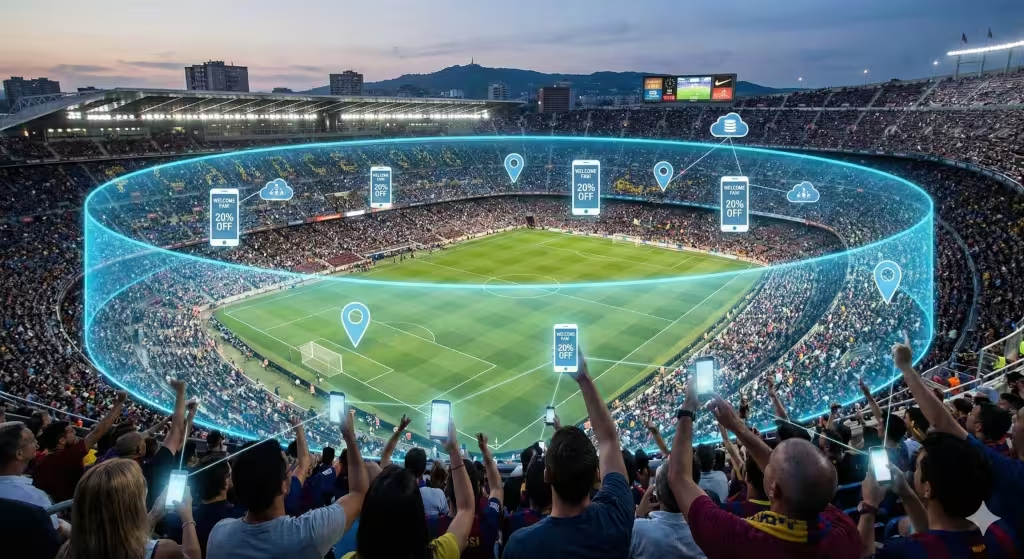
In today’s article, we are talking about a very cool tool used in sports marketing. Imagine you are walking toward a huge stadium. You are wearing your favorite team jersey. Just as you cross the street to enter the gate, your phone buzzes. You get a message saying, “Welcome to the game! Tap here for 20% off a hot dog at Jim’s Hot Dog Stand in the next ten minutes.” That is not magic. It is geofencing.
In the world of geography and computer science, we call this a location-based service. It uses things like GPS, Wi-Fi, and cell tower data to build an invisible fence around a place. In this case, that place is a sports arena. As soon as you cross that invisible line with your phone, the system knows you are there. It triggers an action, like sending you that discount code.
For people in sports marketing, this is a game changer. It is the point where geography meets the fan experience. We are no longer just showing ads to everyone in a city. We are talking to the exact person standing in the exact right spot at the exact right time. This is about being precise. It is about making sure the data we use is correct and helpful. When we do this right, fans feel like the team knows them. It makes the game more fun and helps the business make more money.
The Mechanics: How Geofencing Operates in the Athletic Arena
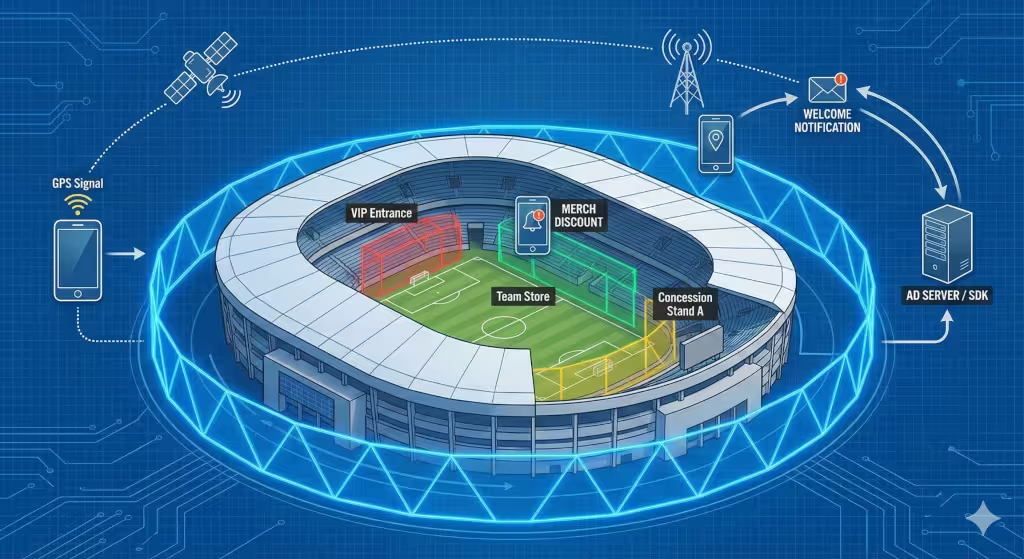
To understand how geofencing works in sports marketing, you have to think about how your phone knows where it is. Most of the time, your phone is talking to satellites high in the sky. This is the GPS. It can also talk to Wi-Fi routers or cell phone towers. All of these tools help find your “coordinates.” These are numbers that tell the world your exact spot on a map.
In sports marketing, we create a “virtual perimeter.” Think of it like drawing a circle or a square on a digital map of the stadium. We can make these fences very specific. A simple version is a “radial fence.” This is just a circle with a certain distance from the middle of the stadium. But in big-time sports marketing, we use “polygons.” These are custom shapes. We can draw a shape that fits the exact outline of the stadium. We can even draw different shapes for the expensive seats versus the cheap seats. This lets us send different messages to different people.
There are three main ways these fences work. First is the “Entry Trigger.” This happens the moment you walk into the fenced area. Second is the “Exit Trigger.” This happens when you leave. For example, a team might send a message saying, “Thanks for coming! Drive home safely,” as you walk out. Third is “Dwell Time.” This is very important for sports marketing. It tracks how long you stay in one spot. If you stand in the team shop for 15 minutes but do not buy anything, the system might send you a coupon to help you decide.
Behind the scenes, we use things called SDKs. This stands for Software Development Kit. It is a piece of code that lives inside the team’s app on your phone. This code is what talks to the satellites and the marketing servers. It handles the handoff of data. It ensures that when you cross that invisible line, the message is sent instantly.9 In my field, we focus on making this happen without draining your phone battery. We want the data to be perfect so the sports marketing plan works every single time.
Strategic Applications for Teams and Small Businesses
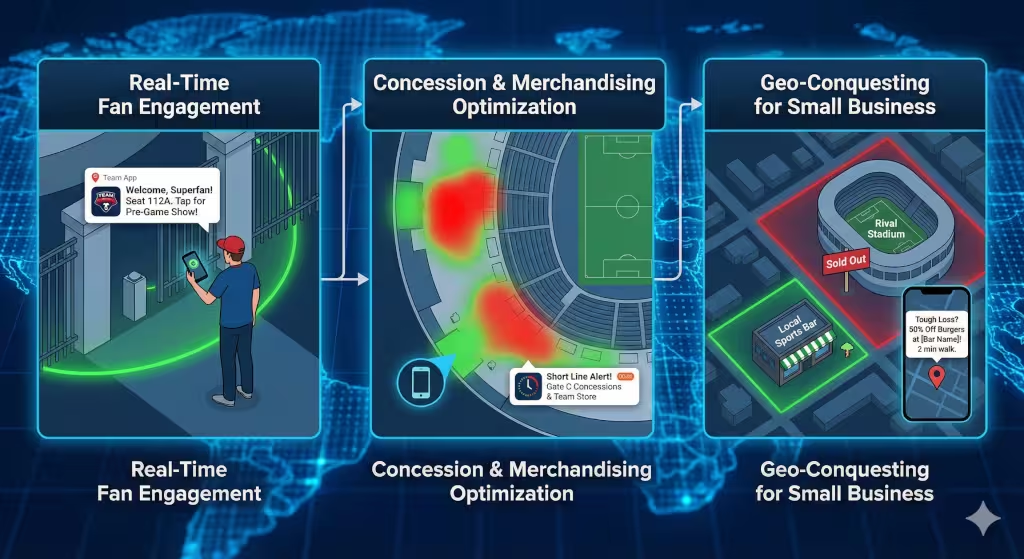
When people think about sports marketing, they often think about big TV ads. But geofencing is about the small, personal moments. For a sports team, the goal is to keep fans happy and spending money. One way we do this is with “Real-Time Fan Engagement.” When a fan walks into the arena, we can send a welcome note. We can tell them where their seats are or what time the pre-game show starts. This makes the fan feel special.
Small businesses can also use this for sports marketing. Imagine a sports bar across the street from the stadium. They can set up a geofence around the stadium itself. When the game ends and people start leaving, the bar can send an ad. It might say, “Tough loss? Come grab a half-price burger and talk about the game with us!” This is called “Geo-Conquesting.” It is a smart way to get customers from another location.
Another big part of sports marketing is making the stadium run better. We call this “Concession and Merchandising Optimization.” If the lines for hot dogs on the north side of the stadium are too long, the team can see that using location data. They can send a message to fans in those lines. It might say, “The lines on the south side are empty! Go there and get a free soda.” This helps the fans get their food faster. It also helps the stadium sell more because people do not give up on waiting in line.
We also use “Proximity-Based Alerts” for the team store. If a fan is near the jerseys, we can send a video of the star player wearing that jersey. This is a very powerful form of sports marketing. It uses the fan’s location to show them something they already like. It is much better than a random ad. It feels helpful, not annoying.
Questions Answered About Sports Marketing
Many people have questions about how this all works. In sports marketing, we want to be as clear as possible. Here are some of the things people often ask.
How does geofencing work in sports?
It works by using the sensors in your smartphone. When a team starts a sports marketing campaign, they choose a location on a map. They use a computer to draw an invisible fence around that spot. When your phone enters that area, the app on your phone sends a signal to a server. The server then sends back an ad or a notification. It is like a digital tripwire.
What are the benefits of geofencing for sports teams?
The biggest benefit for sports marketing is getting better results. We look at something called the CTR, or Click-Through Rate. People are much more likely to click an ad if it is about where they are right now. It also gives the team “Granular Fan Data.” This means they can learn a lot about how fans move. They can see which parts of the stadium are popular. This helps them plan better games in the future.
Is geofencing in sports marketing legal?
Yes, it is legal, but there are strict rules. We have to follow laws like GDPR in Europe and CCPA in California. These laws are all about protecting your privacy. In sports marketing, we always use “Opt-In” systems. This means you have to give the app permission to see your location. If you say no, the geofencing will not work for you. We also make sure the data is kept safe. We care a lot about data integrity.
What are some examples of geofencing in sports?
Many famous teams use this. The Golden State Warriors have used it to help fans find their way around their arena. Some MLB teams use it for “Check-in” rewards. If you go to five games in a season, the geofence tracks your visits. Then, it might give you a free hat. These are all ways that sports marketing uses your location to reward you for being a fan.
Measuring Success: KPIs and Spatial Analytics
In my job, I love looking at the numbers. In sports marketing, we need to know if our plans are working. We use something called KPIs, or Key Performance Indicators. One of the most important ones is the “Conversion Zone.”
A conversion zone is another geofence. But instead of sending an ad, this one just watches to see if you show up. For example, we might show a fan an ad for a team t-shirt while they are at home. Then, we draw a geofence around the team store at the stadium. If that fan walks into the store later that day, we know the ad worked. This is how we prove that sports marketing is making money.
We also look at “Attribution Modeling.” This is a fancy way of saying we track the journey. We want to see the path a fan takes. Did they see an ad on social media? Did they then enter the geofence? Did they finally buy something at the game? By linking your mobile device ID to the sales at the register, we can see the whole story. This helps experts in sports marketing know which ads are the best.
Another thing we track is “Dwell Time.” In sports marketing, knowing how long a fan stays in a certain area is very useful. If fans spend a lot of time in the fan zone but do not buy food, we might need to change the menu. We also have to filter out “noise.” Sometimes GPS data is not perfect. It might look like a fan is jumping from one side of the stadium to the other. As a geography expert, I use math to clean up that data. This ensures the sports marketing reports are honest and accurate.
The Future of Geo-Spatial Sports Marketing
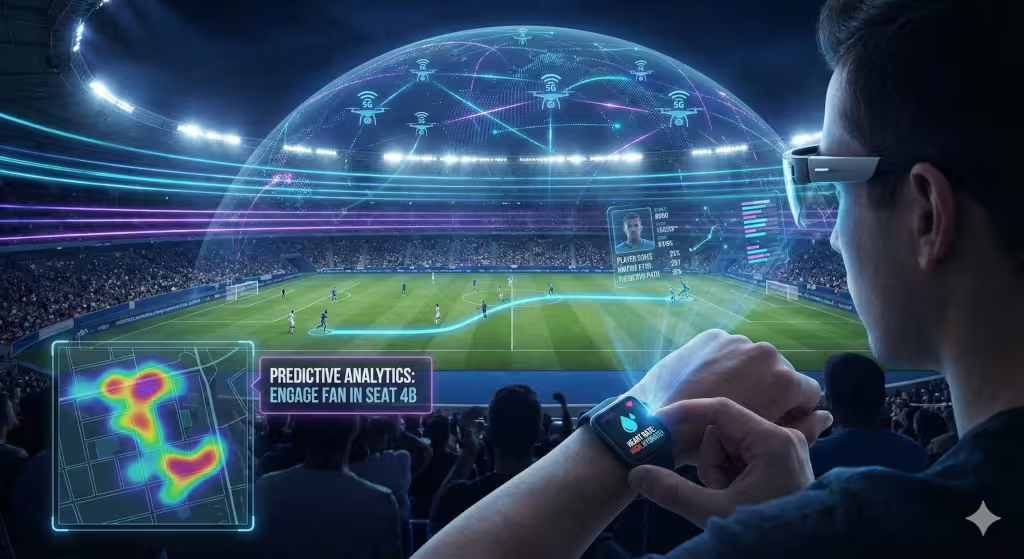
The world of sports marketing is changing fast. It is 2026, and we are seeing things we only dreamed of a few years ago. One big trend is “Predictive Analytics.” This means we use computers to guess what fans will do next. By looking at where fans have walked in the past, we can predict where they will go today. This allows sports marketing to be one step ahead. We can send a message to a fan before they even realize they are hungry!
We are also seeing more “Integration with Wearables.” Many fans now wear smartwatches or fitness trackers. These devices have even better sensors than phones. In the future of sports marketing, your watch might vibrate to tell you that your favorite player just entered the field for warm-ups. Or it might tell you that your heart rate is high, so you should go grab a water at the nearest stand.
Another big thing is the use of 5G and better Wi-Fi. This makes geofencing much faster. In the past, there was a little delay. Now, in sports marketing, the message can arrive the very millisecond you cross the line. This makes the experience feel much more “real-time.”
Finally, we are seeing more “Augmented Reality” or AR. A fan could point their phone at a geofenced area of the field and see digital stats floating over the players. This combines the physical world with the digital world. It is the ultimate goal of sports marketing. We want to make the game more exciting by adding a layer of helpful information on top of what you see with your eyes.
How Small Businesses Can Start with Sports Marketing
If you own a small business, you might think sports marketing is only for big brands. That is not true! Geofencing is actually very affordable. You do not need to spend millions of dollars on a stadium ad. You can just set up a small geofence around the local high school football field or a minor league park.
The first step is to define your goal. Do you want more people to visit your shop? Or do you want them to visit your website? Once you know that, you can pick your “spatial boundaries.” This is just the area you want to fence in. For a small business doing sports marketing, I recommend starting small. Pick a place where your target customers spend their time.
Next, you need a good message. In sports marketing, your message should be helpful. Do not just say “Buy from me.” Instead, say something like, “Heading to the game? Stop by for a free bottle of water with any sandwich!” This gives the fan a reason to visit you. It makes your sports marketing feel like a service.
Finally, you need to track your results. Use a simple system to see how many people used your coupon. This will tell you if your sports marketing is working. If it is not, you can change the fence or the message. That is the beauty of this technology. It is very flexible. You can change your plan in just a few minutes.
The Importance of Data Integrity in Sports Marketing
In my career, I have learned that data is only good if it is true. In sports marketing, we have to be very careful with location data. Sometimes, a phone might give the wrong spot. This can happen if there are a lot of tall buildings or if the weather is bad. If the data is wrong, the sports marketing plan will fail. You might send a “Welcome” message to someone who is still five miles away!
That is why we use multiple sources of data. We do not just rely on GPS. We also look at Wi-Fi signals and Bluetooth beacons. Bluetooth beacons are small devices hidden around the stadium. They talk to your phone using radio waves. They are very accurate. In sports marketing, using beacons helps us know exactly which section a fan is in. This is much better than just guessing with GPS.
We also focus on “Real-Time Triggers.” This means the system has to work fast. If a fan walks past your store, you only have a few seconds to reach them. If the message arrives five minutes later, they are already gone. High-quality sports marketing depends on having a fast tech stack. This means the computers and the internet connection must be top-notch.
Clients should check their data twice. We want to make sure that every dollar spent on sports marketing is actually reaching a real person in a real location. When the data is clean, the business grows. It is as simple as that.
Why Fans Love Geofencing in Sports Marketing
You might think that fans would not like getting ads on their phones. But when sports marketing is done right, fans actually love it. Why? Because it makes their life easier.
Imagine you are at a huge stadium for the first time. You are lost and looking for the restroom. A geofenced message could pop up and say, “The nearest restroom is just 20 feet to your left.” That is not an ad; it is help. This is the best kind of sports marketing. It builds trust between the fan and the team.
Fans also love “Exclusive Content.” A team could set up a geofence around the warm-up area. When fans get close, they could receive a special video of the coach giving a pep talk. This makes the fans feel like they are “inside” the team. It is a powerful way to use sports marketing to create loyalty.
Also, everyone loves a good deal. Getting a discount on a jersey or a drink right when you are thinking about buying one is great. It feels like a reward for being at the game. When sports marketing provides value, it doesn’t feel like marketing at all. It feels like part of the event.
Privacy and the Future of Sports Marketing
As we look toward the future, privacy will be the most important topic in sports marketing. People want to know that their location is not being tracked in a creepy way. At WebHeads United, we take this very seriously. We believe in “Data Integrity” and “Competence.”
The best way to handle this in sports marketing is to be honest. We tell fans exactly what we are tracking and why. We give them the power to turn it off at any time. When fans feel safe, they are more likely to participate. This is how we build a sustainable future for sports marketing.
We are also moving toward “Anonymized Data.” This means we look at the patterns of thousands of fans, but we do not look at you as an individual. We can see that 500 people walked toward the north gate, but we do not need to know their names. This still helps with sports marketing because it tells us where to put our signs and our staff.
The world of sports marketing will continue to grow as long as we respect the fans. By using smart geography and computer science, we can make every game a better experience. Whether you are a big team or a small business, geofencing is the tool that will help you win.