In 2026, the Federal Trade Commission has finalized its most aggressive stance yet on synthetic media. The FTC AI Impersonation Rule Summary 2026 represents a pivotal shift from broad guidelines to specific, enforceable trade regulations. This article provides an analytical breakdown of the current legal landscape, focusing on the expanded liability for upstream developers and the new protections for individual identities. We will examine the transition from the 2024 rulings to the current 2026 enforcement phase, where the “knowledge or reason to know” standard now serves as the primary metric for corporate accountability.
Executive Summary: The State of the Rule in 2026
The world of technology moves fast, but the rules for using it have caught up. By early 2026, the Federal Trade Commission has made it very clear that ai impersonation is a top priority. The main goal of these rules is to stop people from using computer tools to trick others. In the past, scammers would call people and pretend to be from the government. Now, they use computers to make voices that sound exactly like a person’s boss, a bank, or even a family member.
The 2026 rule says that if a company helps these scammers on purpose, or if they should have known their tools were being used for ai impersonation, they can get into big trouble. This is a big change from a few years ago. Back then, the people who made the software often said it was not their fault if someone else used it for something bad. Today, the government says that the people who make the tools have a job to do. They must make sure their tools are safe.
This rule does not just cover big companies or the government. It now covers every single person. If someone uses a computer to copy your voice or your face to steal money, the FTC can go after them. They can also go after the companies that let it happen. This summary will help you understand how these rules work and what you need to do to stay safe.
Understanding the Rule on Impersonation of Government and Businesses
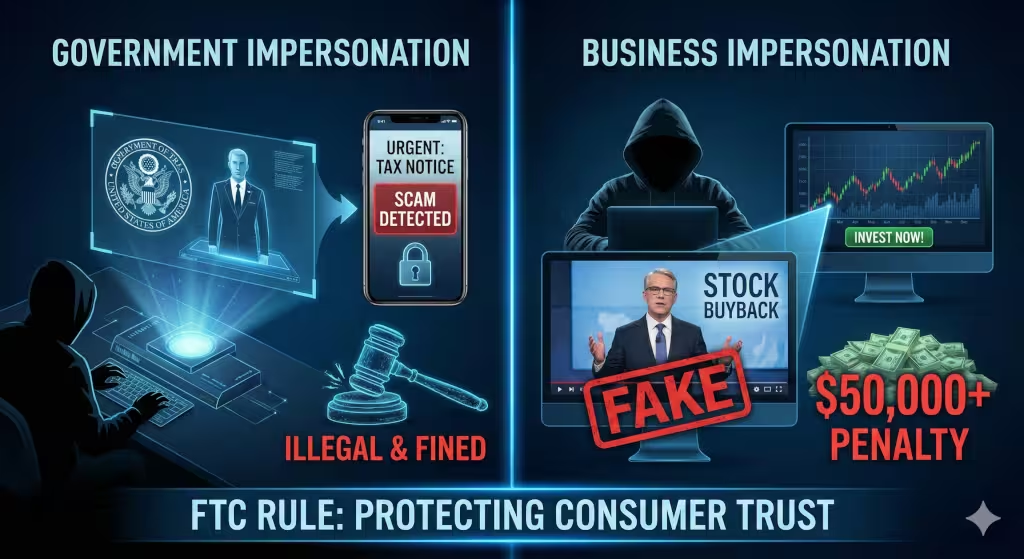
The first part of the rule focused on big groups. For a long time, scammers have used fake emails and phone calls to pretend they are the IRS or a big tech company. With new tools, this became much easier. This is why the FTC created a specific rule against it.
When someone uses ai impersonation to act like a government official, they are breaking a very serious law. It does not matter if they do it through a text message, a video, or a phone call. If the goal is to trick a person into giving up money or private data, it is illegal.
The rule also protects businesses. If a scammer makes a fake video of a CEO telling people to buy a certain stock, that is ai impersonation. The FTC can now fine these people thousands of dollars for every single time they do it. In 2026, the fines are higher than ever before. This is because the government wants to make sure that people can trust what they see and hear online.
The Expansion to Individual Impersonation
In early 2025, the government realized that just protecting businesses was not enough. Most people were getting hurt by ai impersonation that targeted their friends and family. This led to the 2026 update that covers individuals.
Now, it is illegal to use a computer to copy anyone’s likeness without their permission if it is used to lie to people. This is especially important for things like “voice cloning.” A scammer only needs a few seconds of your voice from a social media video to make a perfect copy. They can then call your parents and pretend you are in trouble.
The FTC calls this a “unfair or deceptive act.” Because it is now a formal rule, the government can take the money back from the scammers and give it to the victims. This is a huge step forward. Before this rule, it was very hard for people to get their money back after being tricked by ai impersonation.
The Liability of Upstream AI Developers
One of the most important parts of the 2026 rule is who gets blamed. In the past, if a person used a hammer to break a window, you wouldn’t blame the person who made the hammer. But AI is different. AI tools are very powerful and can be used to cause a lot of harm very quickly.
The FTC now looks at “upstream” actors. These are the people and companies that build the AI models. If a company builds a tool that makes it easy to do ai impersonation, they have to be careful. If the company knows that people are using their tool to scam others and they do nothing to stop it, the FTC can sue them.
This is called the “knowledge or reason to know” standard. It means companies cannot just look the other way. They must have systems in place to spot ai impersonation. For example, if a user tries to make a voice that sounds exactly like a famous politician, the software should probably stop them. If it doesn’t, the company might be held responsible for the harm that follows.
Enforcement Trends and Civil Penalties in 2026
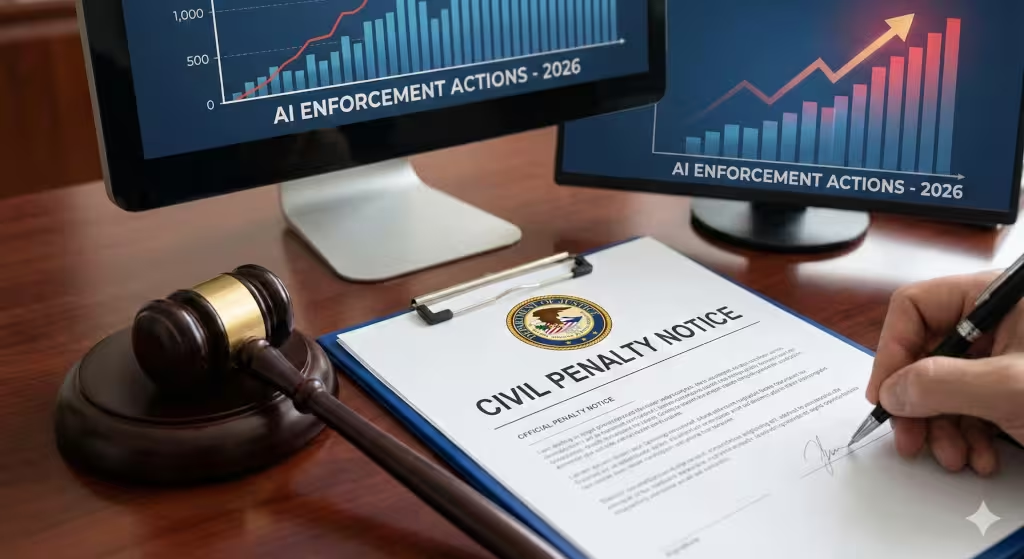
The government is not just making rules; they are using them. In 2026, we have seen many cases where the FTC took action. The fines for ai impersonation are very high. A company can be charged over $50,000 for every single violation. If they trick a thousand people, that fine adds up very quickly.
The FTC also uses something called “consumer redress.” This means they force the bad actors to pay back the money they stole. In the last year, millions of dollars have been sent back to people who were victims of ai impersonation.
Another trend is the use of “Civil Investigative Demands.” This is like a very strong request for information. The FTC can demand to see how a company trained its AI. They want to know if the company was thinking about safety. If a company cannot prove they tried to prevent ai impersonation, they are much more likely to lose their case in court.
AI-Washing and Deceptive Marketing Practices
Not every problem is about a scammer stealing money. Sometimes, companies lie about what their AI can do. The FTC calls this “AI-washing.” It is like “green-washing,” where companies pretend to be good for the environment.
In 2026, the FTC is cracking down on companies that use ai impersonation in their ads. Some companies make fake reviews that look like they were written by real people. Others claim their AI is “sentient” or “human-like” to get more customers.
If a company says their product uses AI to do something amazing, but it really just uses a simple computer program, that is a lie. The FTC says this is deceptive. They want to make sure that when a company talks about AI, they are telling the truth. This helps honest companies because it means they don’t have to compete with liars. Using ai impersonation to create fake “happy customers” is now a surefire way to get a letter from the government.
State vs. Federal Regulation: The 2026 Preemption Battle
There is a big debate going on in 2026 about who should make the rules. Some states, like California and New York, have made very strict laws about AI. They want to protect their citizens as much as possible. These laws often require companies to put “watermarks” on anything made by a computer so people know it isn’t real.
However, the federal government sometimes wants to have one rule for the whole country. This is because it is hard for a company to follow 50 different sets of rules. President Trump issued an Executive Order in late 2025 to try and make things more simple. This has started a “preemption battle.”
Preemption is a fancy word that means the federal law comes first. If a state law is too different from the federal rule, the courts might say the state law doesn’t count. For now, companies have to follow both. They must be careful not to use ai impersonation in a way that breaks state or federal rules. This makes it a very busy time for lawyers and AI experts like me.
Practical Compliance for AI Persona Developers
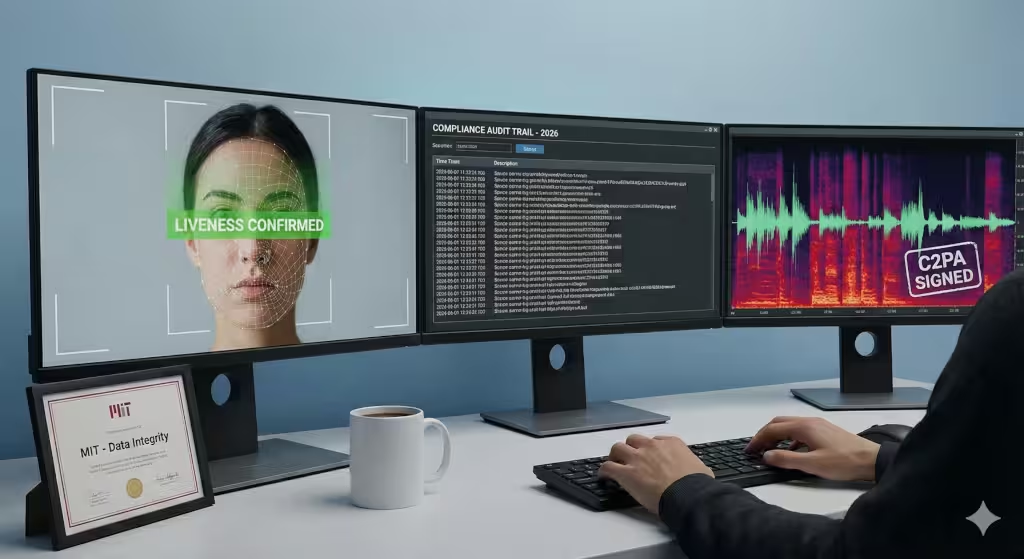
If you are building AI, you need to know how to stay safe. At WebHeads United, we follow a strict set of steps to make sure our work is legal. Here is how we avoid trouble with ai impersonation rules:
First, we always use “liveness detection.” This is a way to make sure the person using the tool is a real human and is who they say they are. If someone tries to use our tools for ai impersonation, the system flags it immediately.
Second, we keep very good records. We write down how we made our models and what we did to make them safe. If the FTC ever asks us questions, we can show them that we acted with “competence” and “data integrity.” These are our core values.
Third, we use watermarking. This means every time our AI makes a voice or an image, there is a hidden code inside it. This code tells people that it was made by an AI. This is the best way to prevent accidental ai impersonation. If everyone knows it is a computer talking, then no one is being tricked.
Common Questions About AI Impersonation
Many people are worried about how these new rules affect them. Here are some of the questions I hear most often in 2026.
Is it illegal to use AI to impersonate a celebrity for a joke?
It depends. If you are doing it for a parody or a joke and everyone knows it is a joke, it is usually okay. But if you use ai impersonation to make it look like a celebrity is selling a product, you are breaking the law. You are also violating their “right of publicity.”
Can I get sued if my AI says something mean?
Yes, but it is complicated. If you built the AI and you didn’t put any safety rules in place, you might be liable. The 2026 rules focus on “harm.” If the AI’s words cause someone to lose money or get hurt, the person who made the AI could be in trouble.
How do I know if I am talking to an AI?
In 2026, many states require companies to tell you. Look for labels like “AI-Generated” or “Synthetic Media.” However, scammers don’t follow the rules. This is why you should always be careful if someone asks for money or passwords over the phone, even if they sound like someone you know. Using ai impersonation is the favorite tool of modern scammers.
Terms Associated with AI Impersonation
To really understand this topic, you should know these terms. They are the words the experts use when they talk about ai impersonation.
-
Synthetic Media: This is a broad term for any video, audio, or image made by a computer.
-
Deepfakes: This is a specific kind of synthetic media where one person’s face or voice is put onto another person’s body.
-
Consumer Redress: This is when the government makes a bad company pay money back to the people they tricked.
-
Section 5 of the FTC Act: This is the old law that gives the FTC the power to stop “unfair or deceptive acts.” The new 2026 rule is built on top of this.
-
Voice Cloning: This is using AI to make a perfect copy of someone’s voice. It is the most common way people use ai impersonation today.
The Importance of Data Integrity
At the heart of the ai impersonation problem is the data. AI models learn by looking at millions of examples of human speech and faces. If the data used to train the AI is stolen or used without permission, it creates a big legal risk.
In 2026, the FTC is looking at “data provenance.” This is just a fancy way of saying “where did this data come from?” If a company uses a dataset of voices without asking the people first, they could be sued. This is why data integrity is so important. You must be able to prove that you have the right to use the information you are putting into your AI.
Innovation vs. Regulation: Finding a Balance
Some people think that too many rules will stop us from making cool new things. As someone who loves innovation, I understand this fear. But I also believe that we can’t have good technology if nobody trusts it.
If everyone is afraid that every phone call is a case of ai impersonation, then no one will answer their phones. That would be bad for everyone. These rules help create a “safe space” for innovation. When companies follow the rules, they show that they are competent and that they care about their customers.
In 2026, the most successful AI companies are the ones that lead with safety. They don’t just try to make the most powerful AI; they try to make the most trustworthy AI. This is how we win in the long run. By stopping ai impersonation, we make the digital world a better place for everyone.
The Role of Professionalism in AI Development
Being a professional means more than just being good at coding. It means thinking about the people who will use your tools.
The 2026 FTC rules are a reminder that we have a responsibility to the public. We shouldn’t just build things because we can. We should build things that help people. Avoiding ai impersonation is a big part of that. If you are a developer, you should be proud to follow these rules. It shows that you are a pro.
The Future of Trust in the AI Era
The FTC AI Impersonation Rule Summary 2026 shows us that the government is serious about protecting us. Whether it is a scammer pretending to be the IRS or a company lying about its software, the rules are now in place to stop them.
As we move forward, ai impersonation will continue to be a challenge. Technology will keep changing, and scammers will find new ways to use it. But with strong rules and smart developers, we can stay one step ahead.
Remember to always be careful with your personal information. If something sounds too good to be true, or if a “friend” asks for money in a weird way, it might be ai impersonation. Stay informed, stay safe, and let’s use AI to build a better future.
The most important thing to take away from this summary is that you are not alone. The law is on your side. If you are a victim of ai impersonation, you should report it to the FTC immediately. They are working hard to make sure that the people who break the rules pay the price.
A Compliance Checklist for Your Business
This compliance checklist is designed to align your operations with the FTC AI Impersonation Rule Summary 2026 as it stands today, February 12, 2026. Given the recent shift in enforcement, moving away from broad bans on tools toward specific deceptive conduct, this list prioritizes evidence of intent and actual consumer impact.
At WebHeads United, we emphasize that preventing ai impersonation is not just about avoiding fines; it is about maintaining the data integrity that sustains long-term innovation.
The 2026 AI Persona Compliance Checklist
| Category | Action Item | Status |
| Operational | Implement robust “Liveness Detection” for all voice/video synthesis. | ☐ |
| Legal | Update Terms of Service to explicitly prohibit ai impersonation for fraud. | ☐ |
| Technical | Apply C2PA-compliant watermarking to all synthetic outputs. | ☐ |
| Marketing | Audit all “AI” claims to ensure they are technical and not “AI-washing.” | ☐ |
| Governance | Assign a “Compliance Lead” to monitor reason-to-know liability risks. | ☐ |
1. Verifying Identity and Intent
The primary defense against a charge of facilitating ai impersonation is a robust verification system. Under the 2026 standards, if your platform allows users to create high-fidelity personas, you must take “reasonable steps” to confirm they have the rights to that likeness.
-
Identity Proofing: Use third-party verification to ensure users are not creating personas of government officials or unrelated private individuals.
-
Use-Case Logging: Maintain a secure, tamper-proof log of what each persona is used for. This helps prove you did not have a “reason to know” about any potential ai impersonation occurring on your platform.
2. Eliminating “AI-Washing” in Marketing
As of February 2026, the FTC has been aggressive in targeting companies that misrepresent their AI’s capabilities. If your product claims to use AI to generate “human-like” trust or “automated” results, those claims must be substantiated by your engineering data.
To avoid a deceptive marketing charge:
-
Ensure all performance claims are based on actual test data.
-
Do not use ai impersonation in your own testimonials unless they are clearly and conspicuously labeled as synthetic performers.
3. Technical Safeguards and Watermarking
A key part of the 2026 regulatory landscape is the transition to “Transparency by Design.” If a consumer cannot tell they are interacting with an AI, you are at risk.
Note: The “Reason to Know” standard suggests that if your tool lacks watermarks, you are effectively providing the “means and instrumentalities” for ai impersonation.
Implementing digital signatures at the metadata level ensures that even if a bad actor tries to use your persona for fraud, the content can be traced back to its synthetic origin.
4. Liability Risk Assessment
From an analytical perspective, we can model the risk of a regulatory inquiry based on the potential for harm. If we define the liability risk (L) as a function of the probability of deceptive output (P) and the potential consumer harm (H), the formula for your internal risk audit might look like this:
To keep L at a manageable level, you must implement “kill switches.” If your system detects a user attempting to generate content that mimics a protected entity, the session should be automatically terminated. This proactive approach is the hallmark of competence in the 2026 AI industry.
5. Managing State and Federal Conflicts
While the federal government has signaled a move toward a “deregulatory stance” to favor innovation, states like California and Texas have not followed suit. Your checklist must include a review of state-specific “Right of Publicity” laws. Even if the FTC does not sue you for ai impersonation, a private citizen in a strict state might.
-
State-Level Disclosures: Ensure that users in high-regulation states receive the required “interaction disclosures” before they begin a session with an AI persona.
-
Data Provenance: Regularly audit your training sets to ensure no unauthorized personal data is being used to fuel ai impersonation models.