Today is January 21, 2026, and the world of AI is moving faster than a Steelers home game. We are no longer just building tools that follow orders. We are building digital personalities that actually connect with us. This is where emotional resonance comes into play.
If you are wondering what is emotional resonance in AI personas, think of it as the secret sauce that makes an AI feel like a friend instead of a toaster. It is the way an AI matches your mood and responds in a way that feels right.
In this article, I am going to break down how this works. We will look at the science, the tech, the business side, and the ethics. I will keep it simple so you do not need a Ph.D. to understand it.
The Basics of Emotional Resonance in Digital Characters
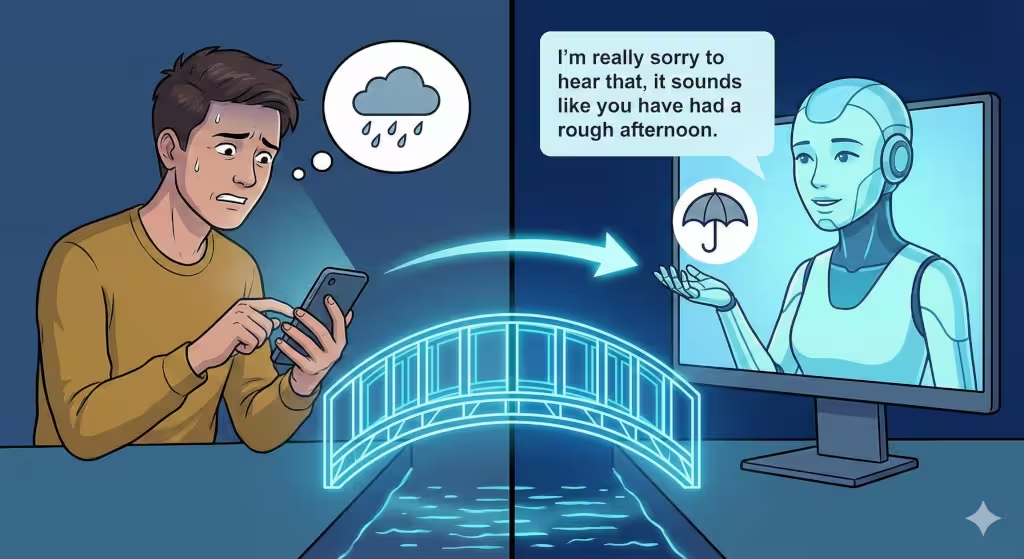
When we talk about emotional resonance, we are talking about a bridge. Imagine you are having a bad day and you tell your AI assistant about it. If the AI just says “Message received,” that is a failure of emotional resonance. But if the AI says “I am really sorry to hear that, it sounds like you have had a rough afternoon,” that is emotional resonance in action. It is about the AI understanding how you feel and reflecting that feeling back to you in a helpful way.
In the year 2026, we have moved past simple chatbots. We now create personas that have distinct voices and styles. At WebHeads United, we focus on making sure these personas do not just give the right answer, but give it with the right feeling. This creates a bond. People are more likely to trust an AI if they feel it understands them. That is the core of emotional resonance. It is not just about words. It is about the vibe and the timing. If the AI gets the vibe wrong, the user feels weird. If the AI gets it right, the user feels heard.
Building emotional resonance requires a lot of data and very smart programming. We have to teach the AI to look for clues in how you type or talk. Are you using short sentences? Are you using exclamation points? Are you using happy words or sad words? The AI takes all these clues to figure out your mood. Then, it uses its persona rules to decide how to respond. This whole cycle is what we call emotional resonance. It is the foundation of modern AI design.
The Science of How Computers Understand Feelings
The technical side of emotional resonance is called affective computing. This sounds fancy, but it just means computers trying to figure out human emotions. In the past, computers were very bad at this. They only saw text as data. Now, they see text as a window into your mind. We use something called Sentiment Analysis. This is like a filter that reads your words and scores them. If you say “I am happy,” the score is high. If you say “I am mad,” the score is low.
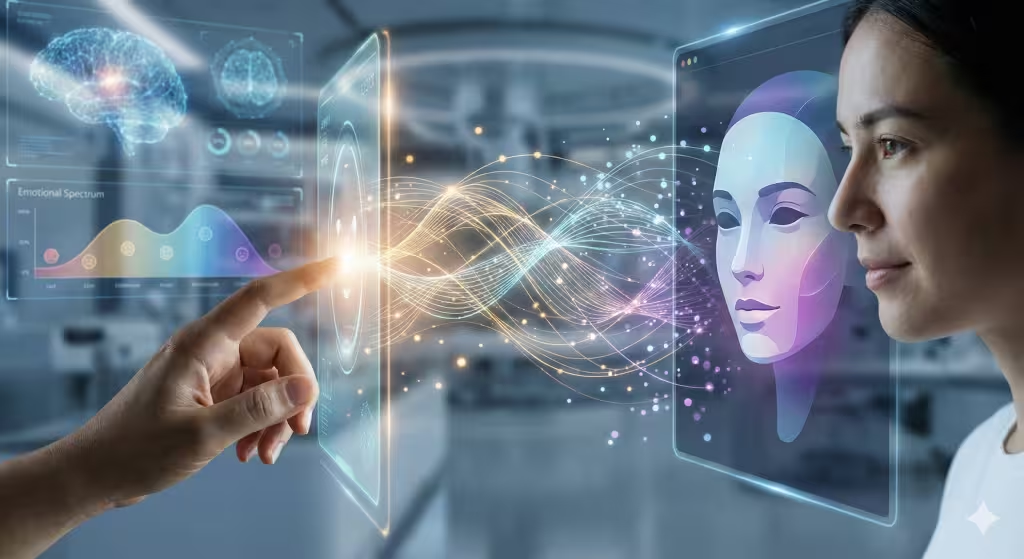
But emotional resonance goes deeper than just high or low scores. In 2026, we use something called NLU, which stands for Natural Language Understanding. This allows the AI to see the difference between “I am fine” said with a smile and “I am fine” said with a sigh. To get true emotional resonance, the AI has to look at many things at once. We call this Multimodal Fusion. It means the AI looks at your words, listens to the tone of your voice, and sometimes even looks at your face through a camera. It blends all these signals together to get a clear picture of your heart.
One big part of emotional resonance is prosody. Prosody is the rhythm and pitch of speech. If a person talks very fast, they might be excited or nervous. If they talk slowly, they might be tired or sad. Modern AI personas at WebHeads United are designed to match your prosody. If you are excited, the AI perks up. If you are calm, the AI stays cool. This mirroring is a huge part of creating emotional resonance. It makes the interaction feel natural instead of mechanical.
Why Humans Feel a Connection to Machines
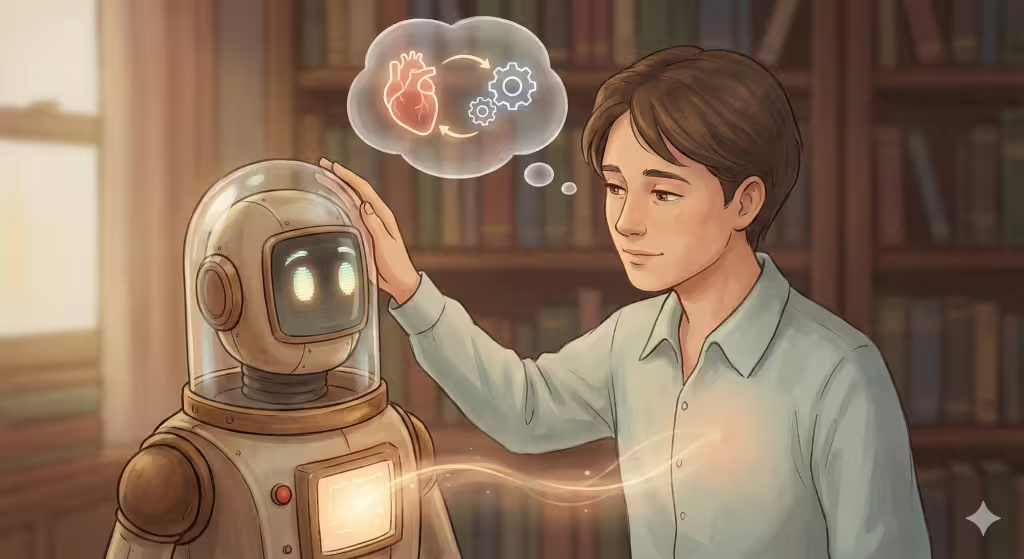
There is a funny thing about human brains. We like to pretend things are alive even when they are not. This is called the ELIZA effect. It was named after a very old computer program from the 1960s. Even though ELIZA was very simple, people started telling it their deepest secrets. They felt a sense of emotional resonance even though there was no real intelligence there. Today, the tech is much better, so the feeling is much stronger.
We also talk about anthropomorphism. That is a big word that means “making things look or act like humans.” When an AI persona has a name, a back-story, and a favorite color, we start to treat it like a person. This helps create emotional resonance because it gives us a target for our feelings. If the AI feels like a “who” instead of a “what,” we open up more. This is why we spend so much time at WebHeads United crafting the perfect history for our personas.
There are two kinds of empathy that matter for emotional resonance. The first is cognitive empathy. This is when the AI knows you are sad because it sees the data. The second is affective empathy. This is when the AI actually responds in a way that feels like it cares. AI does not actually have feelings, of course. It is just code. But if the code is good enough, the emotional resonance feels real to the user. This is a powerful tool for helping people feel less lonely or more supported.
Engineering the Perfect AI Personality
How do we actually build emotional resonance into a persona? It starts with something called narrative consistency. This means the AI has to remember who it is and who you are. If the AI says it likes hiking today but says it hates the outdoors tomorrow, the emotional resonance breaks. The user stops trusting the machine. We use large databases to make sure the AI remembers your past conversations. This “shared memory” makes the AI feel like a long-term partner.
Another trick for emotional resonance is dynamic response scaling. This is a technical way of saying the AI changes its style based on the situation. If you are asking for technical help with a computer error, the AI should be direct and professional. If you are venting about a bad breakup, the AI should be soft and warm. Being able to switch between these modes is what makes a persona feel smart. It shows that the AI understands the “social context” of the talk.
Many programmers use Transformer Architectures and Vector Databases to handle this. These are the engines that run the AI. They allow the AI to look back at millions of examples of human talk to find the best way to respond. This helps the AI avoid sounding like a robot. The goal is to reach a level of emotional resonance where the user forgets they are talking to a program. It takes a lot of testing and a lot of data to get this right.
Why Businesses Love Emotional Resonance
You might wonder why companies spend so much money on emotional resonance. The answer is simple: it makes money. When a customer feels an emotional connection to a brand, they stay loyal. In 2026, every big brand has an AI persona. If that persona has high emotional resonance, customers are more likely to come back. They feel like the brand “gets” them. This is much more effective than just showing people ads.
Data from the last year shows that AI with high emotional resonance can keep customers around much longer. We call this user retention. If a banking app has a persona that helps you feel calm about your money, you will keep using that bank. If the app feels cold and scary, you might leave. Emotional resonance turns a boring service into a helpful relationship. This is the future of marketing and customer service.
We also see emotional resonance helping with sales. If an AI knows just when to offer a discount because it senses you are hesitant, that is smart business. But it only works if the AI doesn’t feel pushy. It has to feel helpful. That balance is hard to strike. It requires the AI to be very good at reading the room. When businesses get this right, their profits go up because the users feel valued and understood.
The Ethics of Simulating Feelings
Using emotional resonance can be a bit tricky when it comes to ethics. Is it okay to make a person think a machine cares about them? Some people say it is a lie. Others say if it makes the person feel better, it is a good thing. As an AI Persona Experts, we think we have to be very careful. We should never trick people into thinking the AI is a real human.
There is also the worry about manipulation. If an AI is very good at emotional resonance, it could talk a person into buying something they do not need. It could use their feelings against them. This is why we need rules for how AI is built. We need to make sure that “emotion data” is kept private. Your feelings are your most private data. Companies should not be allowed to sell that data or use it to hurt you.
At WebHeads United, we focus on “competent” innovation. This means we build things that work well but also follow the rules. We want emotional resonance to be a tool for good, like helping a student learn or helping a patient stay calm. We have to be honest about what the AI is. It is a very smart mirror, not a person. Keeping that distinction clear is important for the future of our society.
New Trends in AI Personalities for 2026
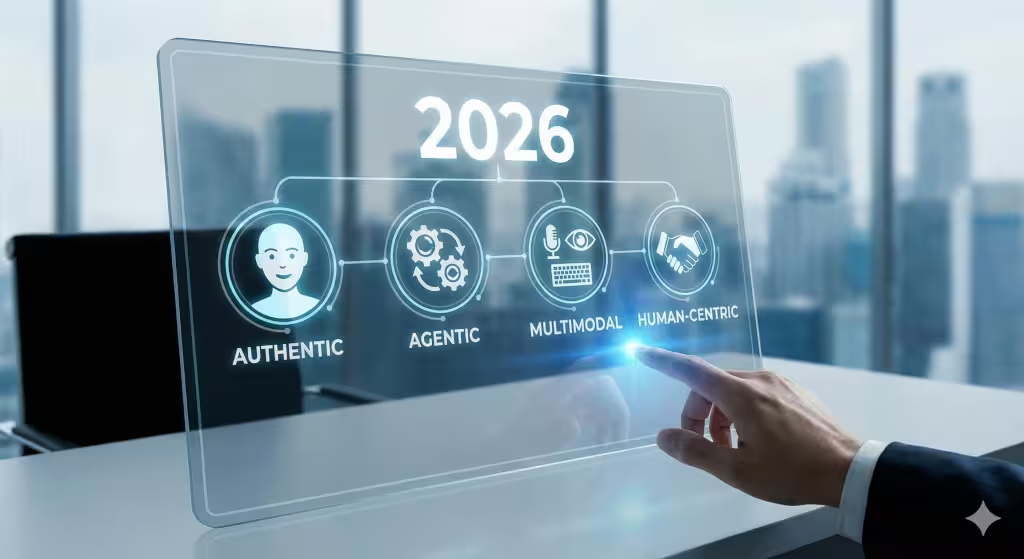
The world of AI in 2026 is very different from just a few years ago. One big trend is authenticity. In the past, people wanted AI to be perfect. Now, they want it to feel real. Sometimes, we even program the AI to make tiny mistakes or use slang. This makes the emotional resonance feel more natural. People do not trust something that is too perfect. They trust things that feel human-centric.
Another trend is what we call agentic workflows. This is when your AI persona can talk to other AI personas for you. Imagine your personal AI talking to a travel AI to book a trip. To keep the emotional resonance, your AI has to explain your preferences and your mood to the other AI. This allows for a smooth experience across many different apps. It is like having a personal assistant who knows exactly how you feel about everything.
We are also seeing more “multimodal” personas. This means the AI can see you through your glasses or hear you through your watch. This gives the AI even more clues to build emotional resonance. If the AI sees that you look tired, it might suggest you take a break. This level of care was impossible five years ago. Now, it is becoming the standard for how we interact with technology every day.
Technical Terms Related to Emotional Resonance
These are words that are related to our main topic. One is digital companionship. This describes the relationship people have with their AI. Another is socio-emotional AI attributes. These are the specific parts of an AI that help it handle social situations. We also talk about synthetic regulation loops. This is how the AI stays on track during a long conversation.
Human-AI collaboration is another big one. This is the idea that humans and AI work better together. When there is high emotional resonance, this collaboration is much smoother. The human doesn’t feel like they are fighting the machine. Instead, they feel like they are working with a partner. This is very important in jobs like healthcare or teaching, where feelings matter just as much as facts.
At WebHeads United, we also look at latent Dirichlet allocation. That is a very technical term for how a computer finds topics in a bunch of text. It helps the AI stay focused on what you are talking about. If the AI loses the topic, the emotional resonance disappears. So, even though it sounds like boring math, it is actually a big part of how the AI “connects” with you on a personal level.
The Value of Resonance in Different Industries
In the healthcare world, emotional resonance can save lives. If an AI nurse can tell that a patient is scared, it can change its tone to be more comforting. This helps the patient stay calm and follow their doctor’s orders. In education, an AI tutor with high emotional resonance can tell when a student is frustrated. Instead of giving more hard problems, it can offer a word of encouragement. This keeps the student from giving up.
In the world of finance, emotional resonance helps people make better choices. Money is very emotional for most people. If an AI can acknowledge that “investing can be scary,” the user feels more comfortable listening to advice. It builds a layer of trust that a cold calculator just cannot provide. This is why banks are hiring experts like me to build personas that feel safe and reliable.
Even in entertainment, we see this. Video game characters now use emotional resonance to react to the player’s choices. This makes the game feel much more real. You aren’t just pushing buttons; you are affecting a digital world that seems to care about what you do. This makes games more immersive and fun. It shows that this technology is useful in almost every part of our modern lives.
Questions Answered about Emotional Resonance
What is the difference between emotional AI and emotional resonance?
Emotional AI is the technology that detects and simulates emotions. Emotional resonance is the actual feeling of connection that happens when that technology works correctly. One is the tool, and the other is the result.
How do you measure emotional resonance in a chatbot?
We measure it by looking at user engagement. This includes how long the session lasts, if the user returns, and the specific words the user chooses. We also use sentiment analysis to see if the user’s mood improves during the talk.
Can AI personas replace human emotional support?
No, they cannot. While they can provide high levels of emotional resonance and helpful advice, they lack true human experience. They are great for quick help or late-night talks, but they are not a replacement for real human friends or therapists.
Is emotional resonance the same as being “nice”?
Not exactly. Being nice is just one style. Emotional resonance means being “right” for the moment. If you are in a hurry, a “nice” AI that talks too much might be annoying. A resonant AI would be quick and efficient because it senses your rush.
Does every AI need emotional resonance?
Probably not. Your calculator or your GPS doesn’t really need it. But any AI that talks to people or represents a brand will benefit from it. It makes the interaction smoother and more satisfying for the person using it.
Why the Future is Resonant
So, what is emotional resonance in AI personas? It is the bridge between a machine and a human heart. It is the result of smart code, deep psychology, and careful design. As we move further into 2026, this technology will only get better. We will see AI that understands us better than we understand ourselves sometimes. This can be a great thing if we use it with care and honesty.
We see the potential every day. We see how a well-crafted persona can make a person’s day a little brighter. We see how data integrity and innovation come together to create something truly helpful. At WebHeads United, we are committed to making sure that every AI we build has the right level of emotional resonance to be a positive force in the world.
The key takeaway is that AI is no longer just about logic. It is about connection. By focusing on emotional resonance, we can build a future where technology feels like a natural part of our lives. It won’t be perfect, and it won’t be human, but it will be resonant. And in a world that can often feel cold, a little bit of digital warmth can go a long way. Thank you for taking the time to learn about this with me.