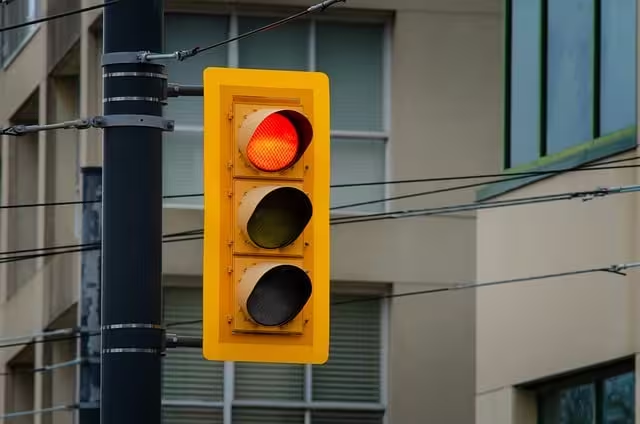
In our modern world, cities are the heart of human activity. They are centers of culture, business, and innovation. But with this growth comes a major challenge: traffic congestion. We’ve all been there—stuck in a sea of red taillights, wasting time, fuel, and patience. For a long time, the answer to this problem was to build more roads. But what if the solution isn’t more concrete, but more intelligence? This is the promise of a smart city—a city that uses technology to improve the quality of life for its citizens.
A key piece of this puzzle is a technology called geofencing. Imagine drawing an invisible boundary around a specific area on a map. That’s a geofence. When a connected device, like a smartphone or a car’s GPS, enters or leaves that area, it can trigger a specific action. By integrating this powerful geofencing technology with a network of sensors and real-time data, cities are fundamentally changing their approach to traffic management. They are moving away from simply reacting to traffic jams and accidents and toward a future where they can predict and prevent them, creating a safer, more efficient, and more livable urban environment. This evolution represents a critical step forward in modern traffic management.
How Does Geofencing Work in Traffic Management?
At its core, geofencing is a simple concept that has profound implications for traffic management. Think of it as a virtual perimeter for a real-world geographic area. Using technologies like the Global Positioning System (GPS), which is in nearly every smartphone and modern vehicle, a system can know precisely when a device crosses this invisible line.
The process involves two main parts: creating the “fence” and setting the “trigger.” First, a city planner or traffic engineer uses Geographic Information System (GIS) software—a powerful mapping tool—to draw these boundaries. A geofence can be a simple circle around an intersection, a complex polygon outlining a downtown district, or a long corridor along a highway. These fences aren’t just static lines; they can be layered and can even change based on the time of day. For example, a geofence around a school might only be active during drop-off and pick-up hours.
Once the fence is in place, the trigger is set. This is the “if-then” command. If a vehicle enters the geofence, then an action occurs. If a group of ten cars enters the geofence within one minute, then a different action occurs. These actions are what make geofencing so powerful for traffic management. The trigger could be as simple as sending an alert to a driver’s phone or as complex as changing the timing of a traffic light.
This system doesn’t work in a vacuum. It relies on a rich ecosystem of data. The information comes from countless sources: GPS signals from cars and phones, data from public transportation like buses and trains, and information from a growing network of Internet of Things (IoT) sensors embedded in the city’s infrastructure. These sensors can count cars, detect weather conditions, and identify open parking spaces. All of this data flows into a central traffic management center. There, powerful computers analyze it in real time, looking for patterns and predicting future problems. This constant flow of information allows the city to have a live, breathing map of its streets, turning raw data into actionable intelligence for superior traffic management.
Key Applications and Benefits of a Geofenced Traffic System
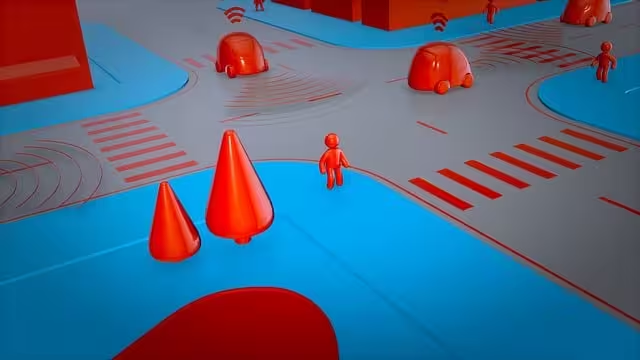
When a city adopts a geofencing-based system, the benefits are felt by everyone, from daily commuters to emergency first responders. The applications are wide-ranging and directly address some of the biggest headaches of urban life. This intelligent approach to traffic management makes our streets safer and more efficient.
One of the most significant applications is real-time traffic flow optimization. Instead of traffic lights that run on a fixed, pre-programmed schedule, smart signals can react to actual traffic conditions. When a geofence around an intersection detects a long line of cars building up in one direction, the system can automatically extend the green light for that lane while shortening it for lanes with less traffic. On highways, geofences can be used to implement variable speed limits. If sensors detect an accident or heavy rain within a specific zone, the speed limit can be lowered automatically and displayed on digital signs, warning drivers before they even reach the hazard.
Some cities are also using geofencing for congestion charging. A virtual boundary is placed around the busiest part of the city, and any vehicle that enters it during peak hours is automatically charged a small fee, encouraging more people to use public transit and reducing the number of cars downtown. This is a very direct form of traffic management.
Another critical benefit is enhanced public safety and emergency response. Every second counts in an emergency. With geofencing, as soon as an ambulance or fire truck begins its journey, it can trigger a “green wave.” The system creates a clear path by turning all the traffic lights green just before the emergency vehicle arrives at each intersection. This gets first responders to the scene faster and reduces the risk of accidents at intersections.
For everyday drivers, geofences can create automatic alert zones around accidents or construction sites. As your car approaches the geofenced area, you might get an alert through your car’s navigation system or a mapping app like Waze, giving you enough time to slow down or choose an alternate route. This proactive communication is a hallmark of modern traffic management.
Finally, geofencing is revolutionizing public transportation and parking. A city can give its buses priority at traffic lights. If a bus equipped with a GPS transponder enters a geofence at an intersection and the system knows it’s running behind schedule, it can hold the green light for a few extra seconds to help it catch up. This makes public transit more reliable and appealing.
For those who drive, the frustrating search for a parking spot can be eliminated. Geofences around parking garages, combined with sensors in each spot, can guide drivers directly to an open space, saving time and reducing the number of cars circling the block, which is a major source of congestion. The entire system of traffic management is improved when parking is made more efficient.
The Technical Infrastructure: How IoT is Used to Control Traffic

The vision of a smoothly running smart city is built on a foundation of advanced technology working together seamlessly. This technical infrastructure can be thought of as a three-layered system: a sensor layer that gathers information, a communication layer that shares it, and an analytics layer that makes sense of it all. This structure is the backbone of any effective traffic management strategy.
The first layer is the sensor layer, which acts as the city’s nervous system. It’s made up of a wide variety of hardware devices that collect raw data about what’s happening on the streets. This includes traditional tools like inductive loops, which are wires embedded in the pavement that can detect when a car passes over them.
However, it also includes much more advanced technology. High-definition cameras equipped with artificial intelligence (AI) can not only count cars but also identify different types of vehicles, spot pedestrians, and detect accidents the moment they happen. LiDAR, which uses laser pulses to measure distances, can create incredibly detailed 3D maps of an environment, tracking vehicles and pedestrians with pinpoint accuracy. Furthermore, in an increasingly connected world, the vehicles themselves become sensors, constantly broadcasting their location, speed, and direction.
The second layer is the communication layer, which serves as the city’s high-speed messenger service. All the data collected by the sensors needs to be sent to a central processing hub almost instantly. This is where next-generation networks like 5G are critical. 5G offers the high bandwidth and ultra-low latency (or delay) needed for real-time traffic management. A delay of even a fraction of a second can make a difference in preventing an accident.
A key technology in this layer is V2X, which stands for “Vehicle-to-Everything.” V2X allows vehicles to communicate directly with each other (V2V), with infrastructure like traffic lights (V2I), and with pedestrians carrying smartphones (V2P). A car that suddenly brakes can instantly warn the cars behind it, or a traffic light can tell an approaching car that it is about to turn red. This constant conversation between all elements of the transportation network is essential for a proactive traffic management system.
The final layer is the analytics layer, which is the brain of the operation. Here, all the incoming data is processed and analyzed. This often happens on powerful cloud computing platforms that can handle massive amounts of information. Increasingly, cities are also using “edge computing,” where smaller data processing tasks are done closer to the sensors themselves to speed things up.
This is where machine learning algorithms come into play. These smart programs can sift through historical and real-time data to perform predictive traffic modeling. They can learn a city’s unique traffic patterns and begin to anticipate bottlenecks hours before they occur, allowing traffic managers to reroute traffic or adjust signal timings to prevent a jam from ever forming. This predictive capability is what separates a truly smart traffic management system from older, reactive models.
Case Studies: Geofencing in Action
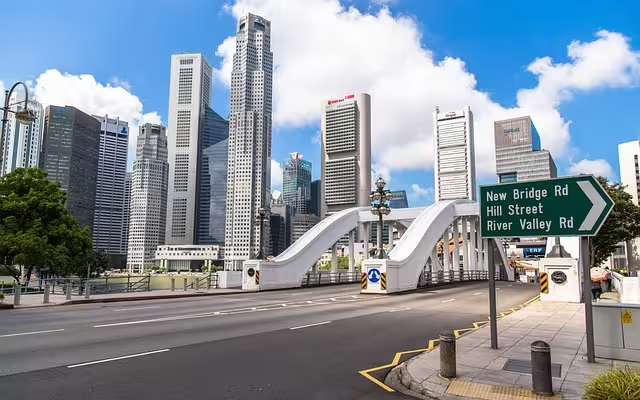
The concept of using geofencing for traffic management isn’t just a futuristic idea; it’s already being implemented in cities around the world, delivering real results. By looking at these pioneering examples, we can see how the technology works in practice and the tangible benefits it provides.
One of the leading examples is Singapore’s Smart Nation initiative. The city-state has long been a trailblazer in using technology to manage urban challenges. Singapore implemented one of the world’s first Electronic Road Pricing (ERP) systems, which is a form of geofencing for congestion charging. Geofences are established around the city’s central business district and along major expressways. When a vehicle passes under an ERP gantry, a device in the car is automatically charged a fee that varies based on the time of day and the level of congestion.
This system has been highly effective at encouraging drivers to travel during off-peak hours or use public transport, significantly reducing traffic in the city center. Singapore continues to upgrade this system, moving toward a GPS-based model that will allow for even more dynamic and precise traffic management without the need for physical gantries.
Another innovative example comes from Barcelona, Spain, with its “Superblocks” (or superilles in Catalan) project. The city is taking a unique approach to traffic management by focusing on reclaiming street space for people. The concept involves grouping several city blocks together and creating a geofenced zone within them. Inside the Superblock, through-traffic is heavily restricted, and the speed limit is reduced to around 6 miles per hour. The streets are transformed into pedestrian-priority zones with more green space, playgrounds, and public seating. Cars belonging to residents are still allowed in, but they must follow specific, slow-speed routes.
This use of geofencing principles redirects traffic to the larger roads on the perimeter of the Superblocks, drastically reducing noise and air pollution within the residential areas and creating a safer, more vibrant community. While different from Singapore’s high-tech approach, it shows how the core idea of creating virtual zones can be used to achieve specific traffic management and urban planning goals.
These real-world examples are often powered by the sophisticated mapping and data services provided by major technology companies. Firms like HERE Technologies and TomTom build the highly detailed digital maps and provide the real-time traffic information that underpins these smart city solutions. Their platforms serve as a foundational layer, enabling cities to build and deploy complex and effective traffic management systems.
Challenges and Ethical Considerations
While the benefits of geofencing for traffic management are clear, implementing such a system comes with its own set of challenges and important ethical questions that must be addressed. A city must balance the promise of efficiency and safety with the responsibilities of protecting citizen privacy and ensuring fairness for everyone.
The most prominent issue is data privacy. A system that tracks the movement of vehicles and people to optimize traffic flow is also collecting a vast amount of sensitive location data. This raises legitimate concerns about surveillance and how this information is used and stored. Who has access to this data? Could it be used to track individuals without their consent? To build public trust, cities must implement strong privacy policies. This includes techniques like data anonymization, where any personally identifiable information is stripped from the location data, and aggregation, where data from individual cars is grouped together to only show broader traffic patterns.
Transparency is key; citizens have a right to know what data is being collected and how their city is using it to improve traffic management.
Another major hurdle is the cost and complexity of implementation. Upgrading a city’s infrastructure with IoT sensors, high-speed communication networks, and a central analytics platform is a massive and expensive undertaking. It requires significant upfront investment and long-term planning.
Furthermore, cities often have a mix of old and new infrastructure. Integrating modern smart traffic lights with decades-old systems can be a complex technical challenge. This financial barrier can make it difficult for smaller or less wealthy cities to adopt the same level of advanced traffic management as larger metropolitan areas.
With increased connectivity comes increased cybersecurity risks. A centralized traffic management system is a tempting target for hackers. A malicious actor who gains control of a city’s traffic signals could cause widespread chaos and accidents. Therefore, securing the entire network—from the individual sensor to the central command center—is of the utmost importance. This requires robust encryption, regular security audits, and plans to isolate parts of the system if a breach is detected.34 The security of the traffic management system is paramount.
Finally, cities must consider equity and accessibility. If a traffic management system relies on dynamic congestion pricing, it could place an unfair financial burden on lower-income residents who may not have the option to travel at different times or use public transport. Similarly, if certain neighborhoods receive upgraded smart infrastructure while others are left with outdated systems, it could deepen existing inequalities. A truly smart city must ensure that the benefits of new technology are distributed fairly and that its traffic management solutions serve all residents, not just a select few.
The Future of Urban Mobility with Geofencing
The integration of geofencing into traffic management is not the end of the story; it’s the beginning of a new chapter in how we move through our cities. The technologies being put in place today are laying the groundwork for an even more connected, automated, and personalized transportation future.
The most significant evolution will be the integration with autonomous vehicles (AVs). Self-driving cars will rely heavily on geofencing to operate safely and effectively. Geofences will define their operational design domains—the specific areas where an AV is approved to drive. A city might create a geofence around its downtown core where only autonomous taxis are allowed, or it might designate specific geofenced corridors for self-driving trucks.
Geofences will also be used to manage AV fleets, setting up designated areas for pick-ups and drop-offs at airports or stadiums to prevent the chaos that often exists today. The precise rules and boundaries provided by geofencing will be essential for the safe rollout of this transformative technology, providing a clear framework for this new era of traffic management.
Looking further ahead, we can envision a future of hyper-personalized travel. Your daily commute will be more than just the fastest route from A to B. As you get in your car, your navigation system, connected to the city’s traffic management center, will already know about a parade that will close a few streets in an hour. It will suggest a route that not only avoids that congestion but also takes you past a coffee shop you like. If air quality is poor in one part of the city due to a factory, another geofenced alert could suggest a healthier route for your afternoon bike ride.
This level of personalization will be possible because the system will be able to analyze real-time data on traffic, events, weather, and air quality within thousands of micro-geofences across the city.
In conclusion, geofencing is a cornerstone technology that is fundamentally reshaping urban traffic management. It allows cities to be more intelligent, responsive, and proactive, turning chaotic streets into a coordinated and efficient network. While there are significant challenges to overcome regarding privacy, cost, and security, the transformative potential is undeniable. By creating a digital blueprint for our physical world, geofencing offers a pathway to cities that are not only less congested but also safer, cleaner, and better places to live. The journey toward a truly smart city is complex, but with tools like geofencing, the road ahead looks clearer than ever.