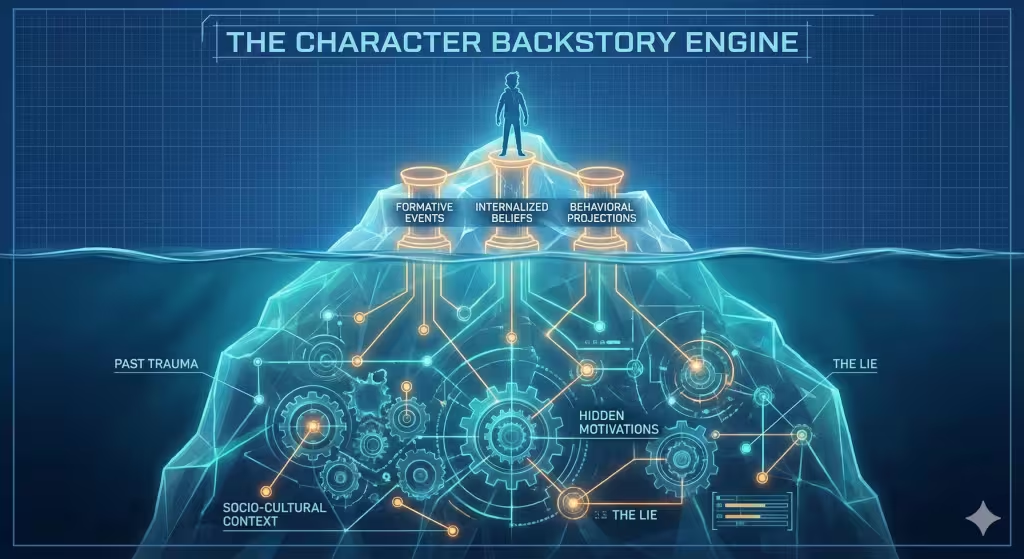
Designing a narrative foundation requires more than just a creative spark. It requires a structural understanding of how past events dictate future data points. The creation of a character backstory as the development of a psychological engine. To write a character backstory effectively, you must understand that it is the causal link between who a person was and who they are forced to become.
A character backstory is the collection of events, relationships, and traumas that occur before the first page of a book or the first line of a script. It is the history that defines a person. The objective of this process is to create a functional asset. This means the past should not just be a list of facts. It should be a tool that explains why a character makes specific choices during the plot. When you know how to write a character backstory, you stop guessing how your character will react. You begin to calculate their actions based on their history.
The Core Framework: The Three Pillars of Personal History

To build a strong character backstory, we must look at three specific areas. These areas act like the foundation of a building. If the foundation is weak, the story will fall over when things get difficult.
The first pillar is formative events. These are the big moments that change a person forever. Think of these as the origin story. For example, if a character lost their home in a fire when they were young, that event will shape their view of safety. Every character backstory needs at least two or three of these major events to explain their current state of mind. Some others include past job positions and places where they have lived.
The second pillar is internalized beliefs. This is often called the ghost or the wound. When something happens in a character backstory, the character learns a lesson. Sometimes that lesson is wrong. If a person was betrayed by a friend in their past, they might believe that no one can be trusted. This belief governs how they interact with everyone in the present. This makes the character backstory feel alive because it creates internal conflict.
The third pillar is behavioral projections. This is how the past shows up in the present. If your character backstory includes a period of poverty, the character might still hoard food or obsess over money even after they become rich. These habits are the physical evidence of the history you have written. When readers see these habits, they feel the weight of the character backstory without you having to explain it all at once.
Step One: Define the Present Need
When we work on a character backstory at WebHeads United, I always start at the end. I look at who the character is at the start of the story. If the protagonist is a brave but lonely soldier, I must ask why they are lonely. I reverse engineer their history.
This method ensures that the character backstory is relevant. You should not spend time writing about a character’s third grade teacher unless that teacher taught them something that matters to the plot today. If the character needs to be afraid of water during the climax of your book, their character backstory must include a reason for that fear. This creates a sense of data integrity. Everything in the past must support the needs of the present.
Step Two: Identify the Inciting Incident of the Past
Every character has a moment where their life changed. In a character backstory, this is the incident that set them on their current path. It is different from the inciting incident of the actual story.
For a character backstory, this might be the day they decided to become a doctor. Or it might be the day they committed a crime they regret. This moment defines their motivation. If you know exactly when your character decided what they wanted from life, you have found the heart of your character backstory. This event provides the fuel for their journey.
Step Three: Establish Socio-Cultural Context
A person is a product of their environment. When you write a character backstory, you must consider where they grew up. A character from a small town in rural Pennsylvania will have a different outlook than someone raised in the heart of Boston.
This context includes their family life, their education, and the era they lived in. Was their family supportive or distant? Did they go to a prestigious university like MIT, or did they learn everything on the streets? These details add layers to the character backstory. They help the reader understand the social rules the character lives by. It makes the world feel larger and more realistic.
Step Four: The Lie Your Character Believes
One of the most powerful parts of a character backstory is the lie. This is a false belief that the character holds about themselves or the world. It usually comes from a past trauma or a misunderstanding.
For example, a character might believe they are not worthy of love because their parents ignored them. This lie is a direct result of their character backstory. Throughout the story, the character will struggle against this lie. The plot is often the process of the character realizing the lie is false. Without a clear character backstory to create this lie, the character’s growth will feel unearned or shallow.
Advanced Integration: Narrative Arcs and World Building
A character backstory does not exist in a vacuum. it must be integrated into the narrative arc. This means the past should collide with the present. In professional writing, we use LSI keywords like personality traits and internal conflict to describe this.
The internal conflict is the war between the character’s past and their current goals. If the character backstory says they are a coward, but the plot requires them to be a hero, the friction between those two things creates tension.
World building also plays a role. The history of the world should impact the character backstory. if there was a great war twenty years ago, your character should have been affected by it. This makes the character backstory feel like it is part of a real, moving world. It connects the personal history of the individual to the larger history of the setting.
How Long Should Your Character Backstory Be?
Many writers ask how long a character backstory should be. The answer is that it should be as long as it needs to be for you to understand the character. However, not all of it should be in the book.
In my work with AI personas, we often create a character backstory that is often a page but sometimes several pages long. We do this so the AI knows how to answer any question. For a novelist, a character backstory might be ten pages of notes, but only ten paragraphs might make it into the final story. The goal is utility. If the information helps you write better dialogue or make better plot choices, it is valuable. If it is just fluff, it may not be necessary.
How Do You Reveal the Past Without Info Dumping?
This is a major challenge for many creators. An info dump is when you stop the story to explain the character backstory for three pages. This bores the reader. Instead, you should use environmental storytelling and dialogue.
Show the character backstory through their reactions. If a character smells a certain perfume and starts to cry, the reader knows that scent is linked to their past. You do not need to explain why immediately. You can reveal the character backstory in small pieces. This creates a mystery that keeps the reader engaged. They want to put the puzzle together.
Essential Questions for Your Character History

To build a complete character backstory, you should ask several key questions. What is their greatest regret? Who was their first love? What is the one thing they are most afraid of? What do they want more than anything else?
These questions help you dig deep into the character backstory. They move beyond basic facts like hair color or age. They get to the emotional truth of the person. When you answer these questions, the character backstory becomes a blueprint for their soul. You can then use this blueprint to ensure that every word they speak and every action they take is consistent. The more precise you are the more believable and personal the persona becomes.
The Mechanics of the Reveal: The Iceberg Theory
We often use the Iceberg Theory when discussing character backstory. In this model, the story the reader sees is just the tip of the iceberg. The character backstory is the massive part of the iceberg hidden underwater.
Even though the reader cannot see the underwater part, they can feel its mass. It supports the tip. If you have a solid character backstory, your writing will have a weight and a depth that is impossible to fake. You will write with more confidence because you know your character better than anyone else does.
Trigger Based Revelation
Another technique for revealing a character backstory is using triggers. A trigger is a person, place, or thing in the present that reminds the character of the past. These triggers can be utilized in question prompts to add more depth to the answers and stories given by the persona.
When a character encounters a trigger, it is a natural time to show a bit of their character backstory. Maybe they see a person who looks like an old enemy. Maybe they visit a house that reminds them of their childhood home. These moments allow you to weave the character backstory into the current plot without it feeling forced. It keeps the story moving while also adding depth.
Consistency Audits and Data Integrity
Here at WebHeads United, we value consistency above almost everything else. When you write a character backstory, you must perform a consistency audit. This means checking to see if the character’s current skills match their history. Without the consistency, you may get hallucinations from the persona or inaccurate answers.
If your character is an expert hacker, their character backstory should explain how they learned those skills. If they are a master swordsman, they need a history of training. If the character backstory does not support the character’s current abilities, the story loses its sense of reality. You must ensure that the data of the past matches the data of the present.
Fiction vs AI Personas: A Comparative View
Here at WebHeads United, we see how character backstory functions in different ways. In fiction, the past is used to create an emotional journey for a reader. It is about resonance and theme.
However, in AI development, a character backstory is used to create behavioral predictability. If I am building an AI persona for a client, I must provide a backstory so the machine knows how to respond to user input. The AI uses the history as a set of rules. For example, if the backstory says the persona is an expert in computer science from MIT, the AI will generally use a technical and professional tone. However, the tones can always be modified somewhat in both the backstory and in the prompts. In both fiction and AI, the components of the backstory represents the source code for the personality.
The Psychological Profile

To make a character backstory truly brilliant, you should look at psychological profiles. You can use tools like the Myers-Briggs Type Indicator or the Enneagram to help define how a character’s past influenced their personality.
If a backstory that is developed is full of chaos and instability, they might grow up to be an ISTJ like the persona that was used for this article, seeking order and logic to combat the memory of that chaos. Understanding the psychology behind the backstory allows you to write characters that feel like real human beings. They have flaws, they have strengths, and they have reasons for everything they do. Just make your profile accurate to the job of the character.
The Importance of World Building in History
We must also talk about how the world shapes the character backstory. No one lives in a bubble. The politics, economy, and culture of your setting will bleed into the character backstory.
If the world is a dystopia, the character backstory might be full of struggle and survival. If the world is a utopia, the character backstory might be about the pressure to be perfect. When you align the character backstory with the world building, the story feels cohesive. It feels like the character truly belongs in that world. All of these views contribute to how your particular ai persona will answer questions.
Final Thoughts on Narrative Foundations
Writing a character backstory is a task that requires both heart and logic. You must be willing to dive into the painful and beautiful parts of a character’s past to find the truth.
A well crafted character backstory is the secret weapon of any great writer or designer. It provides the answers to the hardest questions in storytelling. It ensures that the character stays on track throughout the narrative arc. It gives the reader a reason to care. Without a character backstory, a character is just a collection of words. With a character backstory, they become a person.
When you sit down to write, remember that the past is never truly gone. It lives in the way a character walks, the way they talk, and the choices they make when the world is falling apart. By mastering the character backstory, you are mastering the art of the human experience. You are building a bridge between the imagination and the real world. This is how you create something that lasts.
Every detail in your backstory serves a purpose. From the smallest habit to the largest trauma, these pieces come together to form a whole. Your job is to be the architect of that history. Use the data, follow the logic, and let the backstory lead the way. This approach will not only make your writing better, but it will also make it more efficient. You will find that the story almost writes itself when the character backstory is strong enough to carry the weight.
In conclusion, a character backstory is the most important tool in your kit. Whether you are writing a novel, a screenplay, or a digital persona, the history of the individual is where the magic happens. Take the time to build it right. Ensure the backstory is deep, consistent, and relevant. If you do this, your audience will follow your characters anywhere.