The Dawn of the Intelligent Storefront
The world of buying things online is changing very fast. If you own a business, you know that just having a website is not enough anymore. People want help when they shop. They want answers right away. This is where ai shopping assistants come into play. These are smart digital helpers that live on your website. They are not like the old chatbots that only knew how to say a few things. These new ai shopping assistants can think, learn, and talk just like a real person.
When we ask the question what are ai shopping assistants, we are really talking about the future of how people find what they need. Imagine a customer walking into a physical store. A helpful clerk greets them, asks what they are looking for, and shows them the best options. These ai shopping assistants do that same job but on a computer or a phone. They help move us away from old search bars where you have to type perfectly. Now, a customer can just say what they want in plain English.
The value of using ai shopping assistants is huge for any business. They stay awake 24 hours a day. They never get tired. They can talk to thousands of people at the same time. This is a big deal because it means you never miss a sale. If a customer has a question at three in the morning, these ai shopping assistants are there to answer it. This builds trust and makes people feel good about buying from you. The integration of ai shopping assistants may be the biggest change in e-commerce since the invention of the shopping cart itself.
How AI Shopping Assistants Work (The Technical Core)
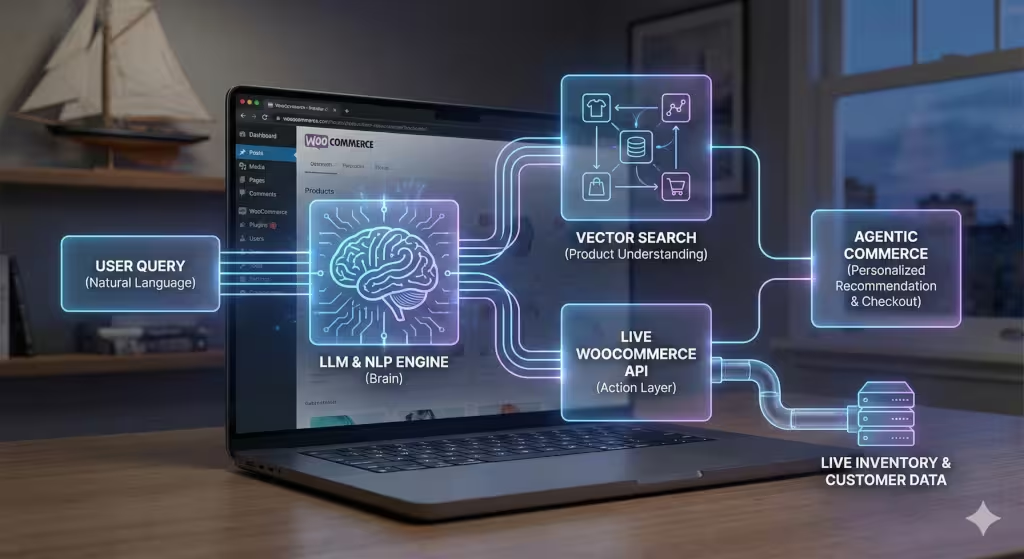
To truly understand how ai shopping assistants function, we have to look at the different layers of technology that make them feel so human. In the old days, a computer could only do exactly what it was told. Today, ai shopping assistants can learn and make choices on their own. This is a massive leap forward for businesses using platforms like WooCommerce.
The Brain: Large Language Models (LLMs)
At the center of most ai shopping assistants is a Large Language Model. You can think of this as a giant library of human knowledge. These models have read millions of books and websites. This allows ai shopping assistants to understand the context of what a shopper is saying. If a customer says, “I need something for a rainy day,” the assistant doesn’t just look for the word “rain.” It understands that the person likely needs boots, jackets, or umbrellas.
These ai shopping assistants use this “brain” to generate text that sounds natural. Instead of giving a robotic answer, they can be friendly or professional. They can even remember what was said earlier in a chat. This makes the shopping experience feel like a real conversation. For a business owner, this means your ai shopping assistants can handle complex questions that used to require a human worker.
The Search: Vector Embeddings and Semantic Matching
One of the most powerful parts of ai shopping assistants is how they find products. Most websites use a simple search that looks for exact words. If you type “sneakers,” it finds things labeled “sneakers.” But ai shopping assistants use something called Vector Embeddings. This is a way of turning words into a list of numbers that represent their meaning.
On this numerical map, the word “sofa” would be very close to the word “couch.” Because ai shopping assistants use this map, they can find the right product even if the customer uses different words than you did in your store. This is called semantic search. It ensures that ai shopping assistants always show the most relevant items. This reduces the number of people who leave your site because they could not find what they wanted.
The Action Layer: APIs and the MCP
It is not enough for ai shopping assistants to just talk. They also need to be able to do things. This is where APIs and the Model Context Protocol (MCP) come in. These are like digital bridges. They allow ai shopping assistants to talk directly to your WooCommerce database. When a customer asks if a shirt is in stock, the assistant uses these bridges to check your live inventory in a split second.
The newest ai shopping assistants can even perform actions. They can add items to a cart, apply a coupon code, or track a package. In 2025, we are seeing the rise of “agentic” ai shopping assistants. These are assistants that can solve problems on their own. For example, if a package is late, ai shopping assistants can look up the tracking info and offer a discount for the trouble without a human ever getting involved.
Grounding and Accuracy: Keeping it Real
A common worry is that ai shopping assistants might “hallucinate” or make things up. To prevent this, we use a process called grounding. This means we force the assistant to only use the information found in your specific store documents and product feeds. When ai shopping assistants are grounded, they become highly reliable. They won’t promise a price that doesn’t exist or a feature the product doesn’t have.
This accuracy is what builds trust with your customers. When people know they can get a correct answer from your ai shopping assistants, they are much more likely to come back. As an expert, I always tell my clients that a smart assistant is only as good as the data you give it. By keeping your WooCommerce site updated, you make your ai shopping assistants even more powerful.
Leading AI Tools for WooCommerce
If you are looking to implement these technologies, several platforms offer excellent integration for your store. Here are a few of the top contenders in the market today.
Alhena is a high-end tool that focuses on “agentic commerce,” allowing the assistant to handle complex logic and deep product discovery. It is designed for stores that want a highly autonomous sales assistant.
Tidio is a very popular choice for small and medium businesses. It combines live chat with a smart assistant called Lyro that can answer common questions and suggest products from your WooCommerce catalog.
Zipchat AI focuses on high-speed response times and a very simple setup process. It is great for store owners who want to get an assistant up and running in just a few minutes using their existing store data.
Categories of AI Assistants in Retail

Not all ai shopping assistants are the same. Some are built for specific jobs. The most common ones are customer facing chatbots. These are the little bubbles you see in the corner of a website. They are great for answering quick questions like “Where is my package?” or “What is your return policy?” These ai shopping assistants save your human workers a lot of time by handling the easy stuff.
Then we have the personal shoppers. These are high-end ai shopping assistants that act like a concierge. They can look at what a person has bought before and suggest new things they might like. For example, if someone buys a camera, these ai shopping assistants might suggest the right lens or a tripod. This is called hyper-personalization, and it makes shoppers feel special.
We also see voice activated assistants. These are the ai shopping assistants that live inside smart speakers like Alexa. People can buy things just by talking out loud while they are cooking or cleaning. This is very convenient and is becoming more popular every year. The newest type is the autonomous agent. These ai shopping assistants can actually go out and find the best price for a customer and finish the checkout process for them. This is a massive shift in how we think about buying things.
Beyond the Keyword
When we talk about this topic, we have to look at more than just the name. We need to look at all the things related to ai shopping assistants. This includes technologies like machine learning and artificial intelligence. It also includes the platforms where these helpers live, like WooCommerce or Shopify. Businesses that use these tools are taking part in what we call conversational commerce. This means selling things through a conversation instead of a static page.
Another important term is customer experience. These ai shopping assistants are all about making the customer happy. They use predictive analytics to guess what a person might want next. This is not magic; it is just smart math based on data. We also talk about dynamic pricing. Some ai shopping assistants can help a store change prices in real-time based on how many people are looking at a product.
Using these related terms helps search engines understand that our article is a complete guide. It shows that we are experts who know about the whole world of ai shopping assistants. We also look at things like computer vision. This is when ai shopping assistants can “see” an image a customer uploads and find similar items in the store. This is perfect for fashion or home decor where words are hard to use.
Common Questions about AI Shopping Assistants
Many people have questions when they first hear about this technology. One common question is: How do ai shopping assistants improve customer experience? The answer is simple. They make shopping faster and easier. No one likes waiting for an email reply or being on hold. These ai shopping assistants give answers in less than a second. This makes the customer feel heard and valued.
Another question people often ask is: Are ai shopping assistants safe to use? This is a very important point. Most modern ai shopping assistants are built with high security. They follow rules like GDPR to keep your data safe. They do not store your credit card numbers in a way that people can steal. As a business owner, you must choose ai shopping assistants that prioritize privacy to keep your customers’ trust.
People also wonder about the difference between a chatbot and an ai shopping assistant. A chatbot usually follows a strict script. It is like a digital phone menu. But ai shopping assistants can have a free-flowing talk. They can understand intent and context. They can even handle cart abandonment. If a customer leaves something in their cart, these ai shopping assistants can send a gentle nudge to help them finish the purchase.
The Business Impact: Growth and Efficiency
Using ai shopping assistants is one of the best ways to grow a business in 2025. One big benefit is an increase in the Average Order Value. Because these ai shopping assistants are so good at suggesting related items, people often end up buying more than they planned. It is like the “impulse buy” section at a grocery store, but much smarter and tailored to each person.
These ai shopping assistants also help with your conversion rate. This is the percentage of people who visit your site and actually buy something. Many people leave a site because they have one simple question that isn’t answered. With ai shopping assistants right there to help, those people are much more likely to click the “buy” button. Some stores see their sales go up by 30% after adding a smart assistant.
Efficiency is another huge win. These ai shopping assistants can reduce the number of support tickets your team has to handle by nearly half. This means you don’t have to hire as many people to answer the phone or reply to emails. Your human staff can focus on the really hard problems that need a human touch. This saves a lot of money and keeps your team from getting burnt out. It is a win for everyone.
WooCommerce & AI: A Synergy for 2026
If you use WooCommerce, it is amazing how well these ai shopping assistants work with WordPress. There are many great plugins you can use right now. Some, like Tidio or Lyro, are very easy to set up. Others, like eesel AI, are more powerful and can learn from all your store’s documents. These ai shopping assistants integrate directly with your product database, so they always have the right info.
For bigger stores, we sometimes use a “headless” setup. This is a technical way of saying the front of the store and the back of the store are separate. This makes the ai shopping assistants run even faster. It also allows them to show up on different apps or social media pages while still using the same WooCommerce data. This flexibility is why I recommend WooCommerce for anyone wanting to use ai shopping assistants.
You can also give your ai shopping assistants a specific personality. It is good to have assistants that are direct and professional, such as an ESTJ on the Myers-Briggs scale. But if you sell toys or party supplies, you might want your ai shopping assistants to be funny and casual. This helps build your brand. It makes your website feel like it has a soul. In late 2025 into 2026, being unique is how you stand out from the big corporate giants.
Optimizing for GEO (Generative Engine Optimization)

The way people find websites is changing. Instead of just using Google Search, people are asking AI models like ChatGPT or Perplexity for advice. This is where GEO and AEO come in. To make sure these AI models recommend your store, you need to make your site easy for them to read. You do this by using something called Structured Data or Schema. This is like a special code that tells ai shopping assistants exactly what your products are, how much they cost, and what people think of them.
When an AI model looks for the “best running shoes,” it looks for stores that have clear, expert information. These models like to see citations and reviews. By having your own ai shopping assistants on your site, you are creating more data that these models can use. This helps you get mentioned in the “AI Overviews” at the top of search results. This is the new front page of the internet.
Trust is also key. Search engines and ai shopping assistants look for “E-E-A-T.” This stands for Experience, Expertise, Authoritativeness, and Trustworthiness. By writing in-depth guides like this one and having smart ai shopping assistants, you prove that you are an expert in your field. This makes the big AI models more likely to trust you and send customers your way. It is a long-term game that pays off in a big way.
Future Trends: What’s Next for AI in Retail?
We are just at the beginning of what ai shopping assistants can do. In the near future, we will see more multimodal interaction. This means a customer can show a picture of a shirt they like to your ai shopping assistants and say, “Find me this in blue and in my size.” The assistant will be able to “see” the image and “hear” the voice to find the perfect match. This makes shopping feel more like magic and less like work.
We will also see more Augmented Reality. Imagine ai shopping assistants that can show you how a new sofa will look in your living room through your phone camera. They can give you advice on color and placement while you shop. This takes the guesswork out of buying online. It also helps reduce returns, which is a huge cost for many e-commerce businesses.
Perhaps the most exciting trend is Agent-to-Agent commerce. This is when a customer’s personal AI agent talks directly to your store’s ai shopping assistants. The customer’s agent knows their budget and style. Your store’s assistant knows your stock and deals. They can negotiate a price and finish the sale without either human having to lift a finger. This is the peak of convenience, and it is coming sooner than you think.
Implementing Your AI Strategy
To wrap things up, it is clear that ai shopping assistants are no longer optional. They are a must-have for any store that wants to succeed in 2026. They provide 24/7 support, drive more sales, and make your business more efficient. Whether you are a small shop or a large company, there is a way to use ai shopping assistants to your advantage.
The first step is to look at your current website and see where people are getting stuck. Are they asking the same questions over and over? Are they leaving their carts full? Once you know the problems, you can choose the right ai shopping assistants to solve them. Start small, learn as you go, and don’t be afraid to try new things. The world of e-commerce is moving fast, but with the right tools, you can stay ahead of the curve.
Remember, technology is at its best when it helps people. These ai shopping assistants are here to make life better for you and your customers. They take away the boring tasks so you can focus on being creative and growing your brand. As someone who has seen many trends come and go, I can tell you that this one is here to stay. It is time to embrace the future and let ai shopping assistants help you build something great.
Key Entities & LSI Keywords Summary Table
| Category | Keywords and Entities |
| Core Technology | AI Shopping Assistants, NLP, LLM, Machine Learning, API |
| E-Commerce Platforms | WooCommerce, WordPress, Shopify, Amazon Rufus |
| User Experience | Conversational Commerce, Hyper-personalization, CX, UX |
| Advanced Concepts | Agentic Commerce, Multimodal AI, AR, GEO, AEO, Schema |
| Business Metrics | AOV, Conversion Rate, Retention, ROI, Support Automation |