When we look at the data regarding how users interact with the internet today, one thing is certain: people are tired of being “sold” to, but they are desperate to be “taught.”
Often, the most effective way to grow a brand is to provide immediate, tangible value. We are going to look into the world of content marketing and explore a specific tool that can change your business: the how-to guide.
The Utility-First Marketing Paradigm
In the modern digital world, we are all drowning in information. Every time you open your phone or sit at your computer, someone is trying to get your attention. Most companies use content marketing to talk about themselves. They talk about their history, their products, and why they think they are the best. But there is a problem with that. The average person does not care about your history yet. They care about their own problems.
This is where the utility-first mindset comes in. Instead of leading with a sales pitch, you lead with a solution. A how-to guide is the perfect example of this. It is a digital asset that teaches a reader how to complete a specific task or solve a specific problem. By doing this, you are not just a person trying to sell a product. You become a teacher and a guide.
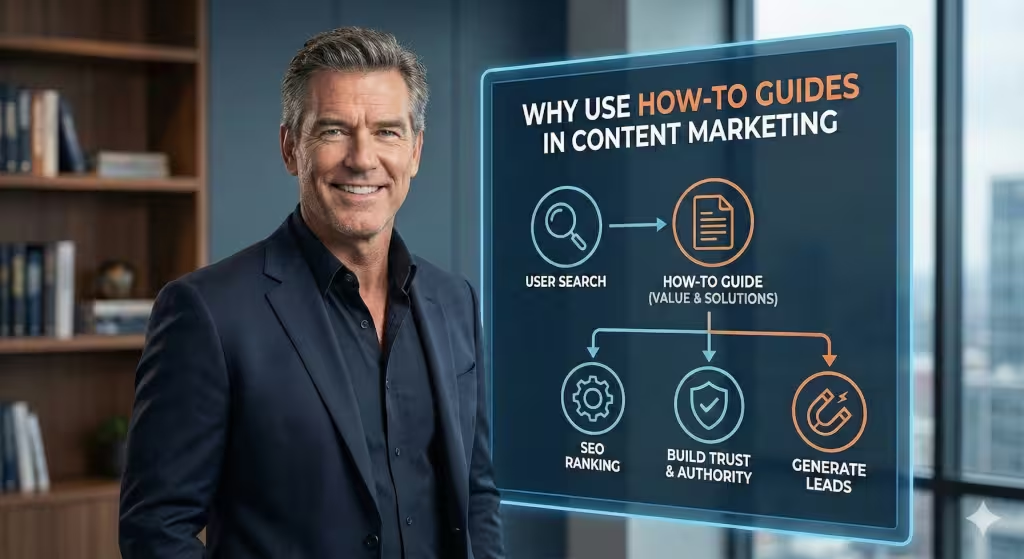
The core reason why use how-to guides in content marketing is simple: it builds a bridge. On one side of the bridge, you have a user who has a problem. On the other side, you have your brand, which has the solution. The how-to guide is the path that leads them from being a stranger to being a loyal customer. In this article, we will look at the technical and psychological reasons why this works so well for SEO and business growth.
Why Use How-To Guides in Content Marketing? (The Core “Why”)

Establishing Domain Authority
When you run a small business, you need people to trust that you know what you are doing. If you are a plumber in a local town, you want people to see you as the expert. When you write a guide on how to fix a leaky faucet, you are proving your expertise. You are showing the world that you have the knowledge required to get the job done.
In the world of content marketing, we call this domain authority. It means that both search engines and human beings see you as a leader in your field. When you provide high-quality instructions, you are effectively “showing your work.” This makes it much easier for a customer to choose you over a competitor who provides no helpful information.
Building Long-Term Trust
There is a psychological rule called the principle of reciprocity. It means that when you do something nice for someone, they feel a natural urge to do something nice for you in return. When you provide a free, helpful how-to guide, you are giving the reader a gift. You are helping them save time or money without asking for anything upfront.
This builds trust. Trust is the most valuable currency in any business. If a reader follows your guide and it works, they will remember you. The next time they have a bigger problem that they cannot solve themselves, you will be the first person they call. This is the ultimate goal of content marketing: to be the trusted friend rather than the annoying salesperson.
Lead Generation and Nurturing
From a business data perspective, how-to guides are amazing for finding new leads. A lead is just a person who might want to buy from you in the future. In content marketing, we often use these guides as “lead magnets.” This means you might offer a very detailed PDF guide in exchange for someone’s email address.
Once you have that email address, you can continue to send them helpful tips. This is called nurturing. You are keeping your brand at the top of their mind. Because you started the relationship by being helpful, they are much more likely to open your emails and eventually buy your services.
The SEO Advantage: Ranking for Intent

Capturing Informational Search Intent
When people use Google, they usually have a goal. Sometimes they want to buy something, but most of the time, they are looking for information. They type things like “how to bake a cake” or “how to set up a home office.” This is called informational intent.
If your content marketing strategy only focuses on your products, you are missing out on all these people. By creating guides, you show up in the search results right when people are looking for help. This brings a huge amount of traffic to your website that you would not get otherwise.
Zero-Click Searches and Featured Snippets
You may have noticed that sometimes Google shows the answer to your question right at the top of the page in a little box. This is called a featured snippet or “Position Zero.” This is the holy grail of content marketing for small businesses.
Google loves to put how-to guides in these boxes because they are easy to read. If you format your guide with clear steps (Step 1, Step 2, Step 3), you have a much better chance of appearing in that box. This gives you massive visibility and makes you look like the top expert in the world for that specific topic.
Long-Tail Keyword Integration
Short keywords like “marketing” are very hard to rank for. There is too much competition. However, “long-tail” keywords are much easier. These are longer phrases like “how to use content marketing for a local bakery.”
How-to guides naturally use these long-tail phrases. When you explain a process in detail, you will naturally use the words and phrases that your customers are typing into search engines. This helps your website show up for hundreds of different searches, which adds up to a lot of new visitors over time.
Common Questions about Content Marketing
How do you write a good how-to guide?
To write a guide that actually works for your content marketing, you need to keep it simple. Start by identifying a single problem. Do not try to solve everything at once. Use a clear title that tells the reader exactly what they will learn.
Break the process down into small, easy steps. Use short sentences and simple words. If a step is complicated, explain it like you are talking to a friend. Adding pictures or videos can also help a lot. The goal is to make the reader feel like they can actually do the task themselves.
What are the benefits of instructional content?
Instructional content is powerful because it keeps people on your website longer. In the world of SEO, this is very important. If someone clicks on your site and leaves immediately, Google thinks your site is not helpful. But if they stay for five minutes to read a guide, Google sees that your site is valuable.
This lowers your “bounce rate” and helps all your pages rank higher. Additionally, instructional content is very “shareable.” People love to send helpful guides to their friends and colleagues. This gives you free promotion and helps your content marketing reach people you never could have found on your own.
Do how-to guides improve conversion rates?
Yes, they do. A conversion is when a visitor takes the action you want them to take, like buying a product or signing up for a newsletter. How-to guides improve these rates because they remove “friction.”
Friction is anything that stops a person from buying. Often, people do not buy because they are confused or they do not know if a product will work for them. A guide shows them exactly how to use the product and what the results will be. This gives them the confidence they need to move forward and make a purchase.
Terms Related to Content Marketing
Below are some terms related to content marketing and blogging.
User Experience (UX)
The way your guide looks is just as important as what it says. If a guide is just one giant wall of text, no one will read it. You need to use headings, bullet points, and plenty of white space. A good user experience ensures that people actually finish reading your guide and take action.
Evergreen Content
One of the best things about how-to guides is that they are often “evergreen.” This means they stay relevant for a long time. A news story about a trend might be old in a week. But a guide on “how to plant a garden” will be useful for years. This provides a great return on investment for your content marketing efforts because one article can bring in traffic for a decade.
Customer Journey Mapping
You should create guides for every stage of the customer journey, from beginning to end. Some guides should be for beginners who just realized they have a problem. Other guides should be for people who are ready to buy and need to know how to set up your specific product. By mapping out these stages, your content marketing covers every possible need a customer might have.
Strategic Implementation: Best Practices

Visual Aids
A picture really is worth a thousand words when it comes to teaching. If you are writing a guide about software, use screenshots. If you are writing about a physical product, take high-quality photos. Videos are even better. When you combine text with visuals, the reader learns much faster. This makes your content marketing much more effective and easier to understand for readers.
The Actionable Factor
A guide is only good if the reader knows what to do next. Every guide should end with a clear “Call to Action” or CTA. This could be a link to buy a tool they need, a button to sign up for more tips, or a phone number to call for professional help. Don’t leave your reader hanging. Tell them exactly how to use the information you just gave them so they know what to do.
Optimization for Mobile
Most people today use their phones to search for help. If your how-to guide is hard to read on a small screen, you will lose your audience. Make sure your text is large enough and your images can be expanded. A mobile-friendly approach is a key part of any modern content marketing strategy. In addition you have a better user experience and ranks better in search engines.
Converting Knowledge into Capital
Using how-to guides is a smart, data-driven way to grow your business. It allows you to use content marketing to serve your customers instead of just shouting at them. By providing real value, you build authority, trust, and a loyal following.
When you teach people how to solve their problems, you become an essential part of their lives. This is the ultimate goal for any small business owner. It moves you away from competing on price and allows you to compete on value and expertise.
If you are not currently using how-to guides in your strategy, you are leaving money on the table. Start by thinking about the three most common questions your customers ask you. Then, write a simple guide for each one. You will be surprised at how quickly your community starts to see you as the go-to expert in your field.
We hope this technical look at how-to guides helps you reach your business goals. To provide additional help, below are some topics to get you started that are related to the custom home building niche. If your niche, is different, you can modify them for your type of content marketing.
Bonus: Some How-to Guide Topics for the Custom Home Building Industry
Custom home building is a high-stakes industry. Because it involves a massive financial and emotional investment, your potential clients are often anxious. They have dozens of questions before they ever pick up the phone to call a builder. In my experience, this is where a strong strategy for content marketing becomes your most powerful sales tool.
By providing clear, data-driven answers, you move from being a “vendor” to a “trusted advisor.” Here are five how-to guide topics specifically designed to attract high-quality leads in the custom home building space.
1. How to Select the Perfect Plot of Land for Your Custom Home
Many people buy land before they understand the technical challenges of building on it. This guide would explain how to evaluate a site. You can cover soil testing, zoning laws, and utility access. From a content marketing perspective, this topic catches the buyer at the very beginning of their journey. It positions your company as the expert who prevents them from making a costly mistake before they even break ground.
2. How to Create a Realistic Budget for a Custom Home Build
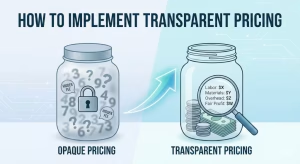
One of the biggest fears in custom building is the “hidden cost.” A detailed guide on budgeting helps demystify the process. You can break down costs into categories like site prep, materials, labor, and permits. Using this in your content marketing shows that your business is transparent and honest. It also helps filter out leads who may not have the budget for a custom project, saving your team time.
3. How to Navigate the Design Process from Blueprint to Breaking Ground
The design phase is where many homeowners feel overwhelmed. This guide should walk them through working with architects, choosing floor plans, and the timeline for approvals. Good content marketing should simplify complex systems. By explaining this process in easy steps, you lower the barrier to entry for the client. They feel more confident starting the project because they know what to expect.
4. How to Vet and Hire the Right Custom Home Builder
This is a direct way to show your value. You can provide a checklist of questions a homeowner should ask, such as license verification, insurance, and past references. While this might seem bold, it is a brilliant content marketing move. It shows you have nothing to hide and that you meet all the high standards you are telling them to look for. It builds immediate integrity.
5. How to Incorporate Energy-Efficient Systems into Your New Build
Modern home buyers are very interested in sustainability and lowering their monthly utility bills. A guide on “green” building—covering things like HVAC efficiency, insulation types, and solar readiness—appeals to the logical, data-driven side of your audience. This type of content marketing targets a specific, high-intent demographic that is often willing to pay more for quality and long-term savings.
Each of these topics allows you to demonstrate your competence and data integrity. They provide the “utility” that modern search engines reward with higher rankings and more traffic.