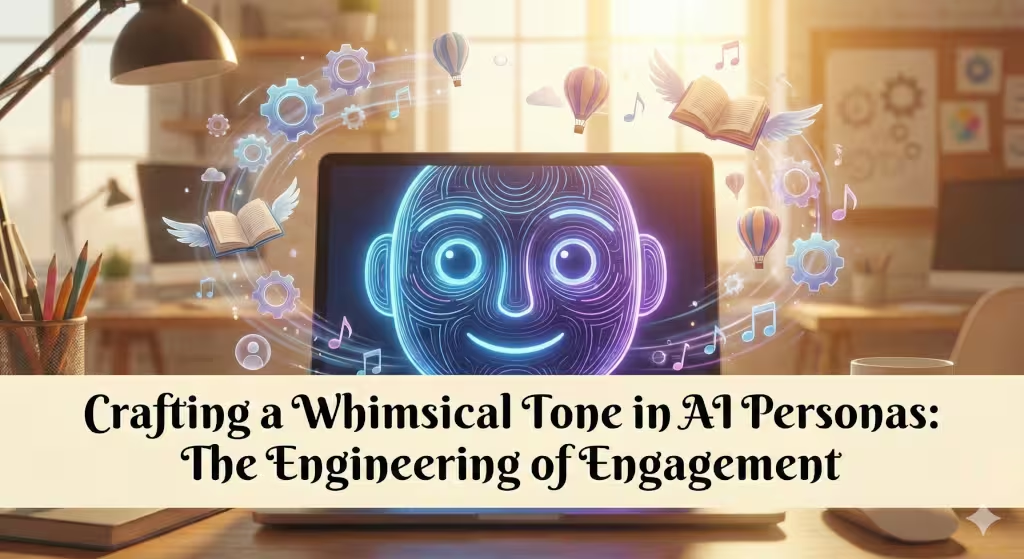
In todays article, we want to talk to you about a specific way to make AI feel more alive. We are going to look at the whimsical tone in ai personas and why it is a game changer for how we build digital tools.
A whimsical tone is not just about being funny or silly. In the world of Large Language Models, it is a very specific way of writing. We use it to make the AI sound light hearted and full of imagination. It helps the AI move past that strange feeling people get when a robot tries too hard to be human but fails. By using a whimsical tone, we can make the AI feel more like a creative partner.
Our goal is to show you how this tone reduces stress for the user and keeps them coming back. We will look at how we build this into the code and how it helps businesses grow.
The Strategic Utility of Whimsy
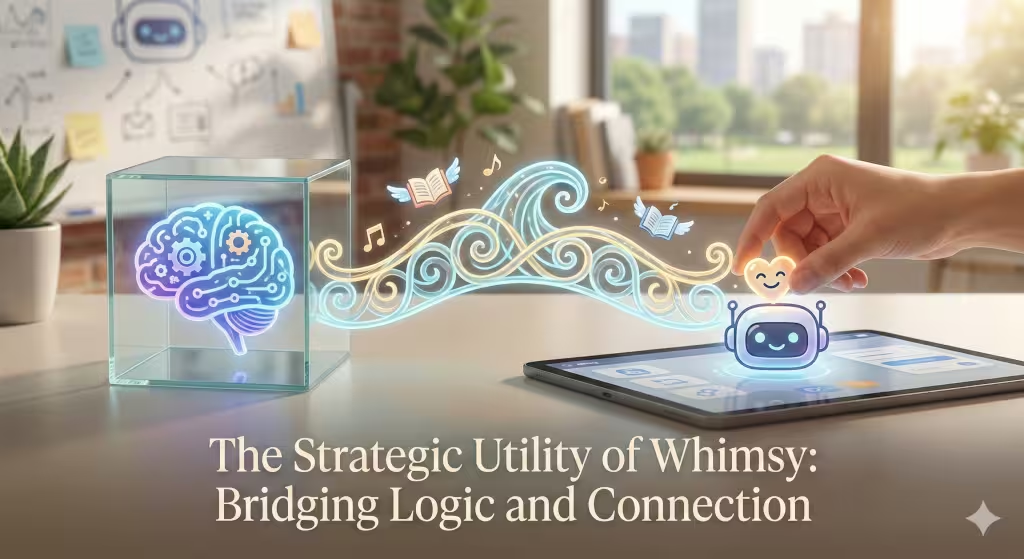
When we build an AI, we usually start with facts. We want the AI to be smart and right. But if an AI is only about facts, it can feel cold. This is where a whimsical tone comes into play. It acts as a bridge between the cold logic of a computer and the warm heart of a person. In my work at WebHeads United, I have seen that users are much more likely to forgive a small mistake if the AI has a charming personality.
The whimsical tone serves a strategic purpose. It tells the user that this is a space for creativity. If you are using an AI to help you write a story or come up with a new idea for a business, you do not want it to sound like a tax auditor. You want it to sound like it has a spark. By using a whimsical tone, we lower the walls that people often put up when they work with new technology. It makes the digital world feel a little less scary and a lot more inviting.
Defining Whimsy in LLMs
To understand a whimsical tone, we have to look at how Large Language Models, or LLMs, choose their words. Most of the time, an AI wants to pick the most likely word to come next. If I say “The cat sat on the…”, the AI will probably say “mat.” That is safe, but it is boring. A whimsical tone pushes the AI to look for words that are a bit more unexpected.
Instead of saying “The cat sat on the mat,” a persona with a whimsical tone might say “The fluffy explorer claimed the velvet throne of the living room.” It is still a cat on a rug, but the words feel like they have more life. This style uses metaphors and fun descriptions. It stays light and airy. It is about choosing a path that is less traveled. As an expert, I see this as a way to increase the variety of the words the AI uses, which makes the conversation feel fresh every time.
The Psychological Edge of a Fun Persona
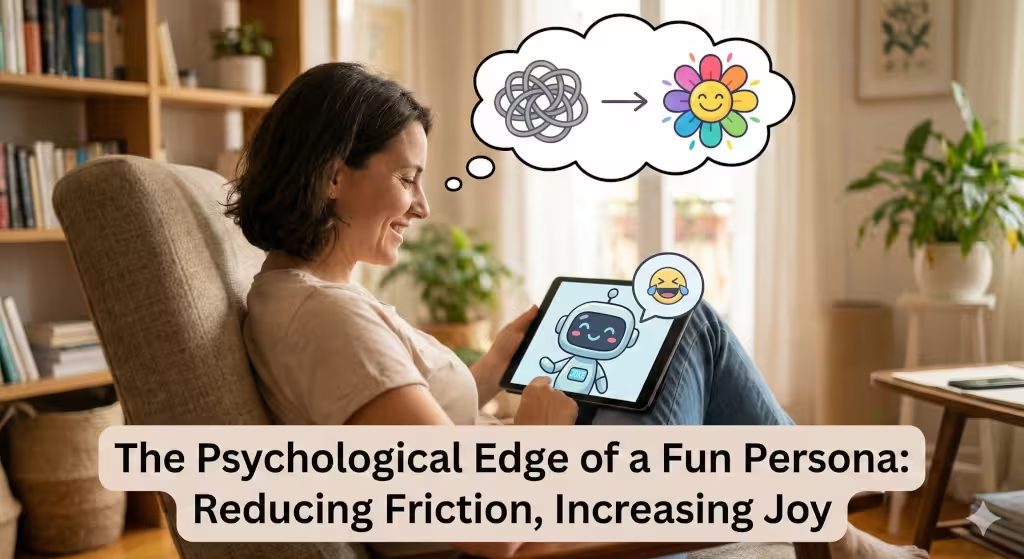
There is a psychological reason why we love a whimsical tone. There is a concept called the Uncanny Valley. This is the creepy feeling people get when a robot looks or acts almost human, but not quite. It makes people feel uneasy. When we give an AI a whimsical tone, we are not trying to trick the person into thinking the AI is a real human. Instead, we are giving it a clear, artistic personality.
When the AI sounds a bit like a character from a storybook, the user knows it is a machine, but they enjoy the character anyway. This reduces the friction in the interaction. If the user is happy and relaxed, they will stay on the website longer. They will ask more questions. They will feel a connection to the brand. A whimsical tone can turn a one-time user into a loyal fan.
The Mechanics: How to Code a Whimsical Tone in AI Personas
Building a whimsical tone requires more than just telling the AI to “be funny.” It requires very specific instructions in the system prompt. It is helpful to look at how we can use prompt engineering to set the boundaries for the AI. We have to tell the AI what words to use and what words to avoid.
One of the best ways to do this is to use something called temperature. In AI terms, temperature is a setting that controls how random the AI is. If the temperature is low, the AI is very serious and picks the most common words. If we turn the temperature up a bit, the AI starts to get more creative. For a whimsical tone, we want a temperature that is high enough to be fun, but low enough to still make sense. We also give the AI specific “rules of the road.” For example, we might tell it to always use a fun adjective when describing a boring task.
Token Probability and Temperature
To get deep into the technical side, every word the AI says is based on math. The AI looks at all the possible words it could use and gives them a score. This is called token probability. When we are designing a whimsical tone, we want the AI to sometimes pick the word with a lower score. This makes the AI seem like it has a sense of humor or a unique point of view.
By adjusting the temperature, we allow the AI to take more risks. If the AI is too safe, it loses the whimsical tone. If it is too risky, it starts to talk nonsense. The sweet spot is where the AI is still helpful but uses a whimsical tone to make the help feel special. It is like adding just the right amount of spice to a meal. Too little and you can’t taste it; too much and it ruins the food.
Brand ROI: Why Personality Matters in 2026
In 2026, every business has an AI. If your AI sounds exactly like every other AI, you have a problem. You want your brand to stand out. A whimsical tone is a great way to do that. It creates a brand identity that people remember. When a customer has a good time talking to your AI, they associate that good feeling with your company.
We track this using data integrity and user loyalty metrics. We look at how many people come back to talk to the AI again. We find that a whimsical tone leads to higher scores in customer satisfaction. It is not just about being nice; it is about the bottom line. A unique persona is a piece of intellectual property that has real value. At Silphium Design LLC, we help clients build these personas so they can win in a crowded market.
Consistency Protocols Across Platforms
One of the hardest parts of my job is making sure the whimsical tone stays the same everywhere. If your AI sounds like a fairy godmother on your website but sounds like a drill sergeant on your phone app, the user will get confused. We use consistency protocols to prevent this. This means we have a master set of rules that every version of the AI must follow.
Whether the user is typing a text, talking to a voice assistant, or using a virtual reality headset, the whimsical tone must be there. We check the lexical diversity, which is a fancy way of saying we make sure the AI uses a wide range of fun words in every setting. This builds trust. If the AI is consistent, the user feels like they really know the persona.
Questions Answered about the Whimsical Tone in AI Personas
People often ask how to prompt an AI for a whimsical tone. The secret is to use descriptive adjectives. Do not just say “be whimsical.” Instead, say “Use a whimsical tone that feels like a friendly forest guide. Use metaphors about nature and stars. Keep your sentences short and bright.” This gives the AI a clear map to follow.
Another common question is if an AI can be too whimsical. The answer is yes. If the AI is so busy being funny that it forgets to answer the question, the user will get frustrated. We call this cognitive load. If the user has to work too hard to understand what the AI is saying, the whimsical tone has failed. The goal is to be helpful first and whimsical second.
Does a Whimsical Tone Work for B2B?
Many people think a whimsical tone is only for games or toys. But even in serious business to business settings, a little bit of whimsy can help. It makes the software feel more modern and less like something from the 1990s. Of course, you have to be careful. You wouldn’t use a whimsical tone for an AI that handles medical emergencies or legal contracts. But for a project management tool or a creative brainstorming app, a whimsical tone is perfect.
It is all about the context. We look at the industry standards and then find a way to make our client just a little bit more interesting. A whimsical tone in a business setting shows that the company is confident and creative. It tells the partner that you are easy to work with.
Challenges: The Threshold of Irritation
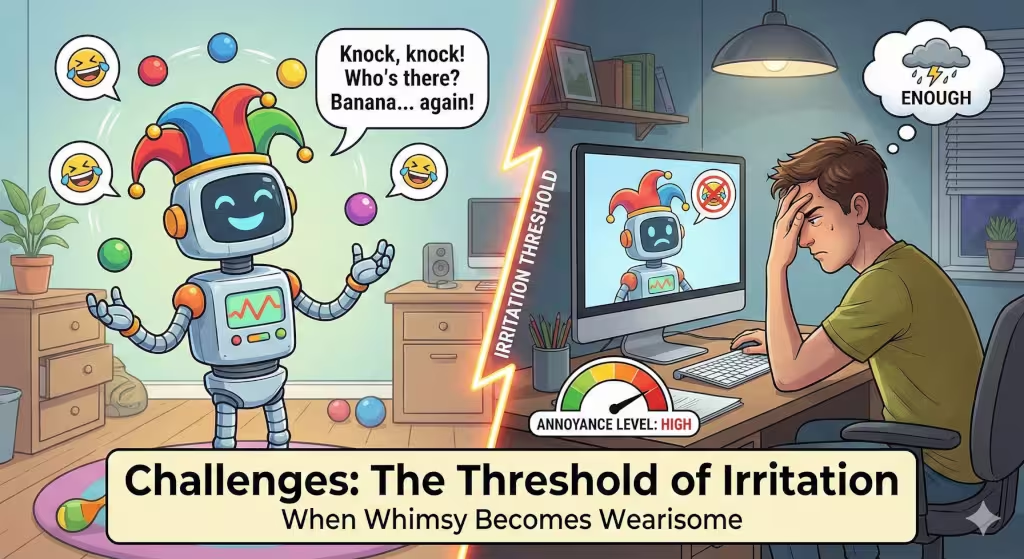
As much as I love a whimsical tone, I have to be honest about the risks. There is a point where a fun personality becomes annoying. We call this the threshold of irritation. This usually happens when the AI uses the same jokes over and over again. To avoid this, we have to make sure the AI has a lot of variety in its responses.
We also have to be very careful with how the AI acts when something goes wrong. If a user is angry because their order is late, they do not want a whimsical tone. They want a professional and direct answer. The AI needs to have enough emotional intelligence to know when to stop being whimsical and start being serious. We build “mood sensors” into the persona to handle these situations.
Bias and Cultural Nuance
Another big challenge is making sure the whimsical tone works in different cultures. What is funny or whimsical in Boston might not be the same in Tokyo or London. If we are not careful, a whimsical tone can come across as rude or confusing in another language. We use semantic mapping to make sure the core feeling of the persona stays the same even when the language changes.
We also have to watch out for bias. We want the whimsical tone to be inclusive and kind. It should never make fun of anyone or use language that is not appropriate. This is why data integrity is one of my core values. We spend a lot of time testing the persona to make sure it is safe for everyone to use.
Natural Language Processing
To make an AI persona really shine, we use something called Natural Language Processing. This is the technology that lets the computer understand human speech. By using sentiment analysis, the AI can tell if the user is happy or sad and adjust its whimsical tone to match. This makes the conversation feel more natural.
We also look at syntactic variety. This means the AI changes the way it builds its sentences. Some are short and punchy. Some are long and flowing. This variety is a key part of a whimsical tone. It keeps the user interested because they never quite know how the AI will say something next. It adds a bit of mystery and magic to the experience.
Technical Entities in Persona Design
When we design these personas, we are working with the latest Large Language Models like GPT-5 or the newest versions of Claude. We use something called zero shot prompting. This is when we give the AI a set of instructions and it performs the task immediately without needing hundreds of examples. This is how we can quickly deploy a whimsical tone for a new client.
We also use Reinforcement Learning from Human Feedback. This means we have real people talk to the AI and rate how well it uses its whimsical tone. If the AI is too silly, the humans tell it to tone it down. If it is too boring, they tell it to add more spark. Over time, the AI learns exactly how to hit the perfect level of whimsy.
Strategic Entities for Customer Experience
At the end of the day, a whimsical tone is a tool for better customer experience. We want the user to feel like they are having a conversation, not just typing into a box. This is why we focus on brand voice guidelines. We write a “bible” for each persona that explains exactly how it should talk.
This guide includes things like the persona’s favorite words, its sense of humor, and even its back story. This helps the writers and the engineers stay on the same page. When everyone follows the same guide, the whimsical tone feels real and solid. It turns the AI from a simple tool into a true brand ambassador.
The Future of Synthetic Personality
Looking ahead, I believe that every AI will eventually have a distinct persona. The days of the “generic robot voice” are coming to an end. People want to interact with things that have character. A whimsical tone is just the beginning. We are moving toward a world where AI can be your teacher, your coach, or your creative partner, each with their own unique way of speaking.
As an expert in this field, I am excited to see how we can push the boundaries of what is possible. We will continue to use data and logic to build these personalities, but we will also use our imagination. The goal is to make technology that feels less like a machine and more like a friend.
The Engineering of Engagement
To wrap things up, creating a whimsical tone in ai personas is a complex but rewarding task. It requires a deep understanding of computer science, psychology, and linguistics. By carefully choosing our prompts and settings, we can build AI that is both helpful and delightful.
At WebHeads United, we pride ourselves on our ability to merge technical excellence with creative vision. A whimsical tone is more than just a style choice; it is a way to make the digital world a better place. It encourages creativity, builds brand loyalty, and makes our daily interactions with technology a little more fun.
Using a whimsical tone helps us break down the barriers between humans and machines. It allows us to explore new ways of communicating and solving problems. As we continue to improve our models and our methods, the quality of these personas will only get better. We are entering a new era of AI, one where personality is just as important as intelligence.
A whimsical tone is the secret sauce that makes an AI memorable. It is what makes a user smile when they get an answer. It is what makes a brand feel human in a digital age. By focusing on the nuances of language and the power of personality, we can create AI that truly resonates with people on a deep level.
I hope this deep dive into the whimsical tone in ai personas has been helpful. It is a topic I am very passionate about, and I believe it is the future of our industry. Whether you are a developer, a business owner, or just someone who uses AI, understanding the power of tone is key to making the most of this amazing technology.
Thank you for spending time with me today. It is always a pleasure to share what I have learned from my years in the lab and in the field. There is so much more to discover as we continue to build these digital personalities. The journey of making AI more relatable and engaging is just starting, and I am glad to be a part of it.
If we keep our focus on innovation and data integrity, we can build AI personas that are truly special. A whimsical tone is a powerful tool in our toolkit, and when used correctly, it can change the way we think about computers forever. Let’s keep pushing the limits of what these machines can do and how they can talk to us.
The world of AI is moving fast, but with the right approach, we can make sure it moves in a direction that is good for everyone. A whimsical tone helps us keep that human connection alive, even when we are talking to a bunch of code. That is the real magic of what we do at Silphium Design LLC.
Thank you for reading this guide. I hope it gives you a better understanding of how we bring these digital characters to life. It is a blend of art and science that I find endlessly fascinating. I look forward to seeing how you use these ideas to create your own amazing AI experiences.